Tuesday, November 15, 2022

Around Town Round-Up: Class-wide Supports Using the Ziggurat Model

Our team LOVES Ruth Aspy and Barry Grossman's The Ziggurat Model! This useful framework makes it easy to prioritize and plan for comprehensive supports when brainstorming interventions. During our coaching, we see examples of The Ziggurat Model in action in a variety of settings. Today's Around Town Round Up will focus on Class-wide Supports that we have seen that meet each layer. 


Sensory Differences and Biological Needs
Class-wide supports for this layer should focus on creating a calming classroom environment and embedding whole-group sensory breaks for students. 
Projected Brain Break Visual with Timer
Deanna Granroth
Wogaman Middle School, Dayton

Calming Classroom Environment
Ashley Holtz
Kleptz ELC, Northmont

Climbing Wall
Amy Pratt
Springcreek Primary, Piqua


Hallway Path
Chris Cool
Dixie Elementary, New Lebanon

Yoga Time
Beth Young and Toni Cockerham
Snyder Park Elementary, Springfield


Whole Group Deep Breathing
Casey Morter
Mad River ECC, Mad River

Visual Boundary
Shanon Vance
Valley Forge Elementary, Huber Heights

Cozy Spot
Shanon Vance
Valley Forge Elementary, Huber Heights

Movement Break
Jolynne Rogers
Mad River ECC, Mad River

Movement Break Visual Cues
Jolynne Rogers
Mad River ECC, Mad River


Reinforcement
Many districts use PBIS supports and teachers have a variety of class-wide reinforcement systems.
Behavior Tickets
Elisha Volp
Northridge Elementary, Northeastern

Behavior Chart
Tara Henrickson
Beavertown Preschool, Kettering

Thrift Store Reinforcers
Amy Day
Englewood Elementary, Northmont

Group Behavior Visual
Jolynne Rogers
Mad River ECC, Mad River


Structure and Visual/Tactile Supports
Knowing what to expect throughout the day can be a huge support for all students! Schedules, class agendas, and visual supports clearly communicate expectations and increase predictability. 
Class Task List
Robin Koronich
Learning Center-West, MCESC

Projected Task List with Timer
Deanna Granroth
Wogaman Middle School, Dayton

Group Schedule
Granville Bastin
Preble ESC

Group Schedule
Lisa Mossing
Beverly Gardens, Mad River

Group Schedule
Rene Naas
Tipp City Middle School, Miami County ESC

Group Schedule
Robin Koronich
Learning Center-West, MCESC

Schedule Google Slide
Traci Gasho
Westbrooke Village Elementary, Trotwood

Group Schedule
Taylor Lawson
Louise Troy Elementary, Dayton

Art Table Job Chart
Christa Everett
Miami East Junior High, Miami East

Fire Drill Visual Cue
Shanon Vance
Valley Forge Elementary, Huber Heights

Schedule Change Visual Cue
Jennifer Schmidt
Beavercreek High School, Beavercreek

Group Schedule
Casey Morter
Mad River ECC, Mad River

Group Time Mini-Schedule

Large Visual Countdown
Rylie Jarrett
Stevenson Elementary, Mad River


Task Demands
Accounting for the various levels of need throughout a classroom ensures that students receive instruction at their instructional level. Often, the most effective way we have seen teachers meet this need is through providing differentiated learning centers. 

Rotation Groups
Bev Richardson
Bruce Elementary, Eaton

Rotation Groups
Haley Urschel
Perrin Woods Elementary, Springfield

Self-Directed Rotation Visuals
Jenna Falldorf
Milton Union Elementary, Milton Union


Positive Environment
The newest addition to The Ziggurat Model emphasizes that students need to feel safe and have positive relationships and experiences while at school in order to be ready for learning.
School Family Display
Rebekah Foust
Mad River ECC, Mad River

Kindness Wall
Jolynne Rogers
Mad River ECC, Mad River


Skills to Teach
We love to see when teachers prioritize direct instruction of skills beyond academics such as communication, coping skills, behavioral expectations, and emotional regulation. These are essential elements to ensuring success for all students. 
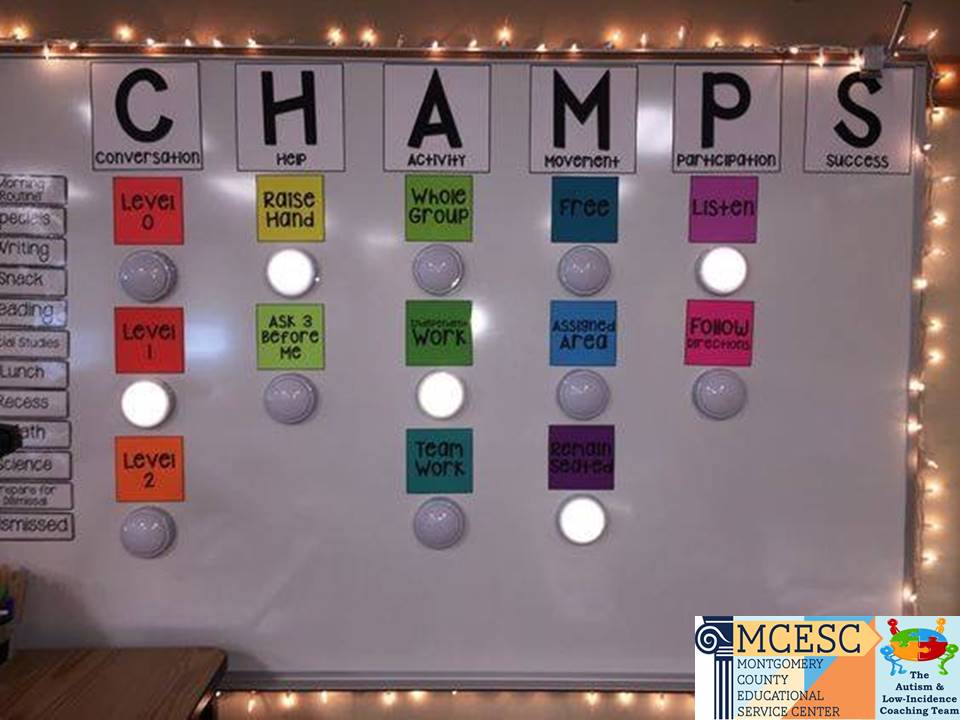
CHAMPS expectations

AAC Support at Door
Christina Helmer
Learning Center-North, MCESC

Communication Wall Display
Laura Windholtz
Learning Center-West, MCESC


Growth Mindset Bulletin Board
Jenna Woelfer
Brantwood Elementary, Mad River

Strategy Wall
Leslie Mann
Smith Middle School, Vandalia

Zones of Regulation Display
Cassandra Hebauf
Northmoor Elementary, Northmont

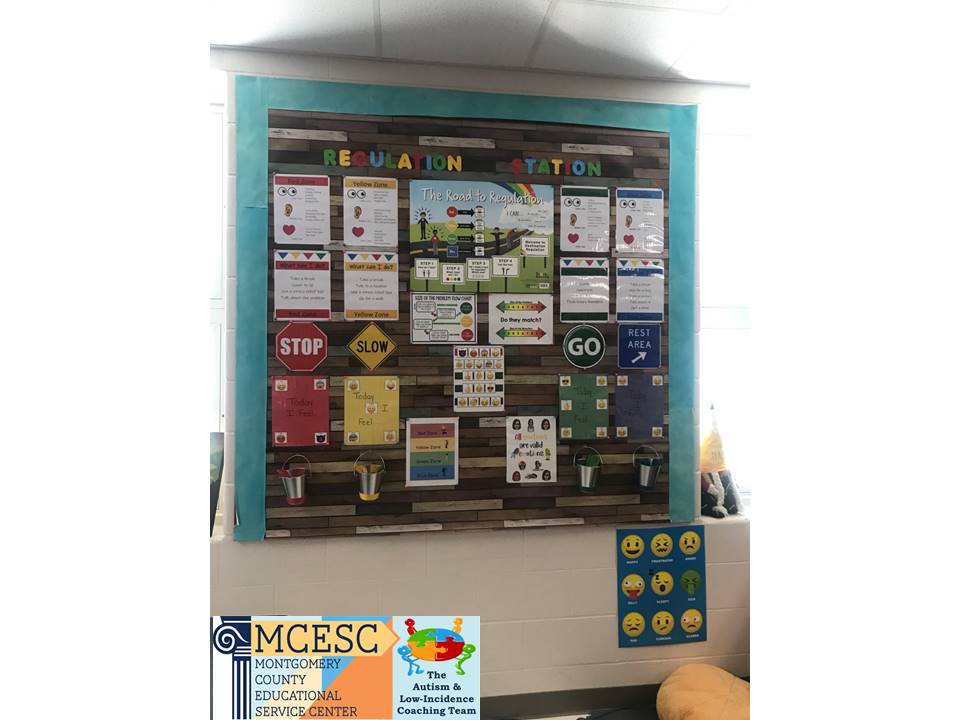
Regulation Station Bulletin Board
Rebecka Stricker
Springcreek Primary, Piqua

For more ideas on using The Ziggurat Model, check out our previous post:

Monday, November 7, 2022

MCESC Autism & Low-Incidence Coaching Team OCALICON2022 Session Preview

Have you heard of OCALICONLINE? This online conference features breakout and networking sessions by state, national and international leaders and experts on important topics and issues across disabilities and across the lifespan. It is a great opportunity to join over 15,000 colleagues and peers from Ohio, across the U.S., and around the world to learn, connect, and share research, best practices, and resources to support the needs of all learners and lifelong challenges and opportunities for people with disabilities.


This year's conference is November 15-18. And our team is so excited to announce we will be presenting three sessions throughout the conference. We hope you can join us! Preview our session topics below:


Wednesday, November 16th
8:45 - 9:45 am

Give Me a Break: Choosing the Right Kind of Break for Your Students' Needs
There are many types of breaks that students may benefit from, each with their own distinct purpose. In this lecture session, we will discuss the importance of implementing a concrete plan for reinforcement breaks, sensory breaks, and spontaneous breaks to help students self-manage "in the moment". Without a plan, expectations can be unclear and may lead to behavior problems or work avoidance. Attendees will learn about when and why to implement each type of break, and examples will be provided.


Wednesday, November 16th
11:00 am - 12:00 pm

Team Collaboration to Build Student Skills
This presentation reviews a planning tool for educational teams to work collaboratively identifying goals and roles to effectively teach students to apply important skills across the day such as engagement in learning, emotional regulation, functional communication, and problem-solving. With practice, priming, prompting, and praise (reinforcement) implemented daily, and across settings, these skills can be generalized and strengthened.


Thursday, November 17th
11:00 am - 12:00 pm

Behavior Cue Cards for Staff: Reading the Signs to Effectively Respond to Behavior
In this session, attendees will learn about an effective tool we call "Behavior Cue Cards for Staff ". As the name implies, this is a great tool for communicating appropriate and consistent behavioral responses across staff members. These cue cards provide information about what a student's behavior looks like at various levels of regulation (Ready to Learn, Rumbling, and Crisis) and the strategies that should be used at each level. During the session, attendees will learn more about how to create cue cards for their own educational teams to support specific student needs.


Tuesday, October 25, 2022

Sensational Social Skills: The Foundation for Building Reciprocal Communication

Building the foundation for reciprocal communication is important at all levels of communication.


Are you working with a nonverbal student who is just beginning to develop basic skills such as maintaining attention to an activity, parallel play, and joint attention with a partner?

Are you working with a verbal student who struggles with conversational skills and body language?

No matter the level you always need to look at the foundation. Today's Sensational Social Skills will examine each part of this essential foundation and provide a variety of examples from our regional classrooms!


The Foundation

In the book, Social Engagement & the Steps to Being Social, (Taylor & Laurel 2016) the importance of creating a foundation on which to build all reciprocal communication and social engagement is illustrated. It is important to monitor and support the foundation when working on developing communication and social skills. We organized the foundational supports into 3 categories:

  • Regulation- If your student is dysregulated, they may not be available for engaging at any level. Monitor your student’s regulation by considering the following:
    • Environmental Distractions (reduce visual and auditory distractions)
    • Space (reduce the space by creating visual and physical boundaries)
Rylie Jarrett
Stevenson Elementary, Mad River

    • Organization (organize the space and develop a predictable routine for interaction)
Rachel Hatton
Normandy Elementary, Centerville


    • Biological (your student may be thirsty, hungry, tired, hot, or cold)
    • Sensory Input (incorporate movement or deep pressure/heavy work)
Heidi Horner
Miami County ESC

Heidi Horner
Miami County ESC


    • Emotional State (find out what your student is upset about to validate and provide encouragement)
Wh-Question Flipbook

    • Touch (avoid unexpected touch or too much hand-over-hand prompting)
    • Slow it down (just sit quietly and wait allowing pauses in the activity)


  • Motivation- It is hard to gain joint attention when the student has no interest in the activity. Try to develop shared pleasure in the activity:
    • If your student is verbal. Ask questions or just listen to find out their interests. Incorporate these interests into the activity.
    • Build interest by incorporating humor and playful fun into your activity.
    • If your student is nonverbal, discover what they like by presenting a variety of activities. Follow their lead. Model the activity with animated gestures and sounds/words. Imitate their actions or sounds.


Paula Taulbee
Mad River ECEC, Mad River


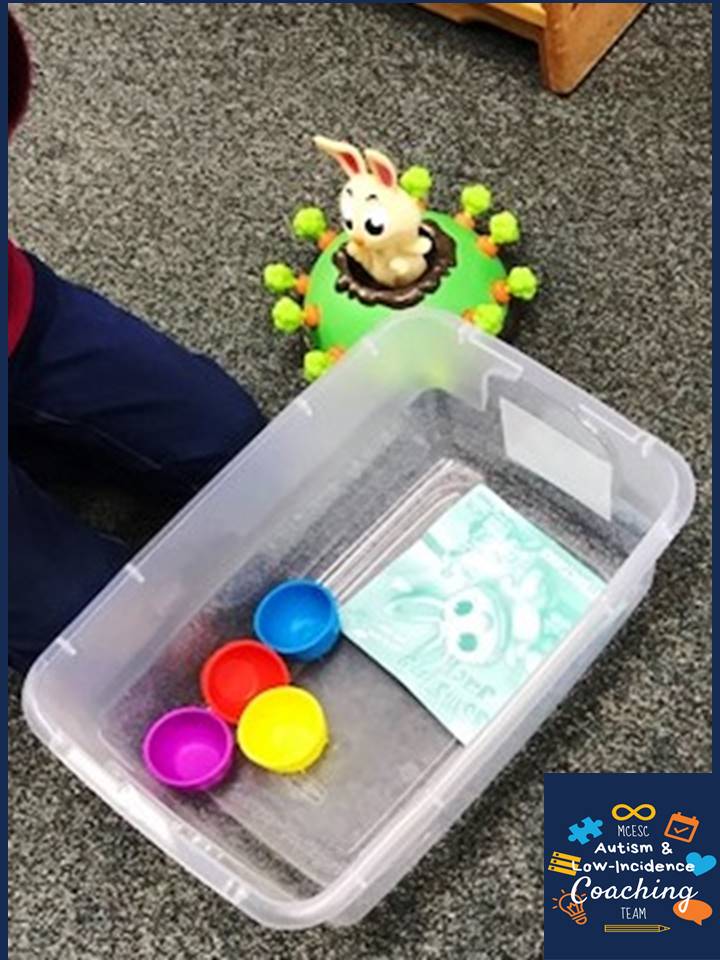
    • Building anticipation can peak interest. Consider games that build anticipation such as these:
Beth Young
Snyder Park Elementary, Springfield


    • Do an interests inventory or send home a parent questionnaire to identify student interests. Click the image below to get a free reinforcement checklist to send home to parents:
    • Develop a plan to reinforce reciprocal interaction.


  • Self-Management- Even when they are regulated and motivated, your students may struggle to be purposeful in their actions. A study by Kogel, Park, & Kogel (2014) found that self-management supports and interventions were effective in increasing reciprocal social conversation for students on the autism spectrum. Self-management supports and interventions may include:
    • Predictable routines with clear expectations
    • Repeated practice in a fun structured setting with transfer to other settings
    • Priming
Jackie Vollmer
Driscoll Elementary, Centerville

    • Peer Mentor Modeling
Mandy Violet
Brantwood Elementary, Mad River

Casey Morter
Mad River ECEC, Mad River


    • Visual Cues for verbal language and nonverbal expectations
      • Sentence Strips to cue scripts 


      • Picture prompts 
Amy D'Amico
MCESC, Learning Center- North


      • Schedules/Checklists 
Kristina Neuhart
Mad River ECEC, Mad River


    • Cognitive Behavioral Intervention to develop self-awareness/advocacy and awareness of others. Visit our Sensational Social Skills Blog for ideas. Click the images below to find our Respond to Others post with corresponding handouts!


Remember: When working on building reciprocal communication skills at any level, always check the foundation and modify your support and the demands as needed for the student to succeed. Check out these examples of students engaged in reciprocal communication. They are regulated and sharing pleasure in a joint activity with an adult or peer.


Miranda Riggs
Mad River ECEC, Mad River

Erika Lauterbach
Dixie Elementary, New Lebanon

Greenville Middle School

Heidi Horner
Miami County ESC