Showing posts with label core words. Show all posts

Tuesday, January 9, 2024

A-LIST Spotlight: MCESC Speech and Language Pathologist Laura Windholtz

We are so excited to kick off the new year by featuring one of MCESC's very own A-LISTers! When we have coached teams at MCESC Learning Center- West it has been evident that SLP Laura Windholtz is a pillar of their school community! Laura goes above and beyond to meet the needs not only of her caseload students but all of the students at West through creating spaces to facilitate communication, working with parents and outside agencies to provide wrap-around resources, and providing essential training for classroom staff.

When we reached out to Laura to contribute to today's A-LIST Spotlight post, she went above and beyond as she does in all things. Keep reading to learn more about the supports she shared.


My name is Laura Windholtz and I am a Speech-Language Pathologist at MCESC. I started working at MCESC in 1995. I worked part-time for several years to raise my children and currently work full-time.  I have served in many school districts over my career, but feel at home at Learning Center West. 


People who know me describe me as enthusiastic, creative, and influential.


As an SLP at Learning Center West, I serve on the building leadership team, work with students that use AAC, train staff, parents and students on a variety of AAC systems, have presented many trainings and implemented a core word of the week curriculum,   Enthusiasm is shown every day through my work, my presentations and commitment to helping staff and students. 


The most rewarding part of my job is giving my students a voice. This is not just a job to me, it is a passion!  I love when student receive a voice for the first time and staff share stories of students using their voice.
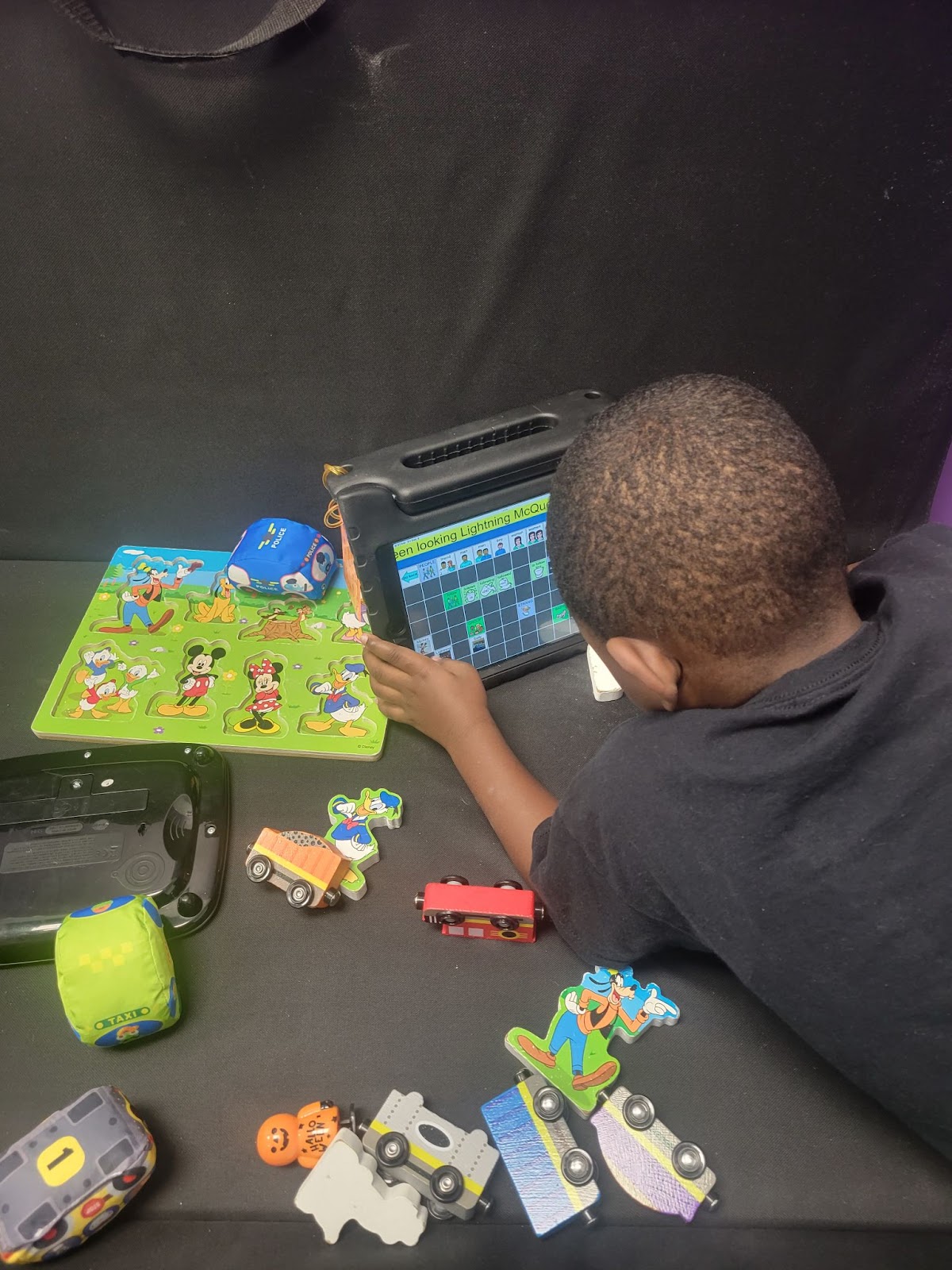
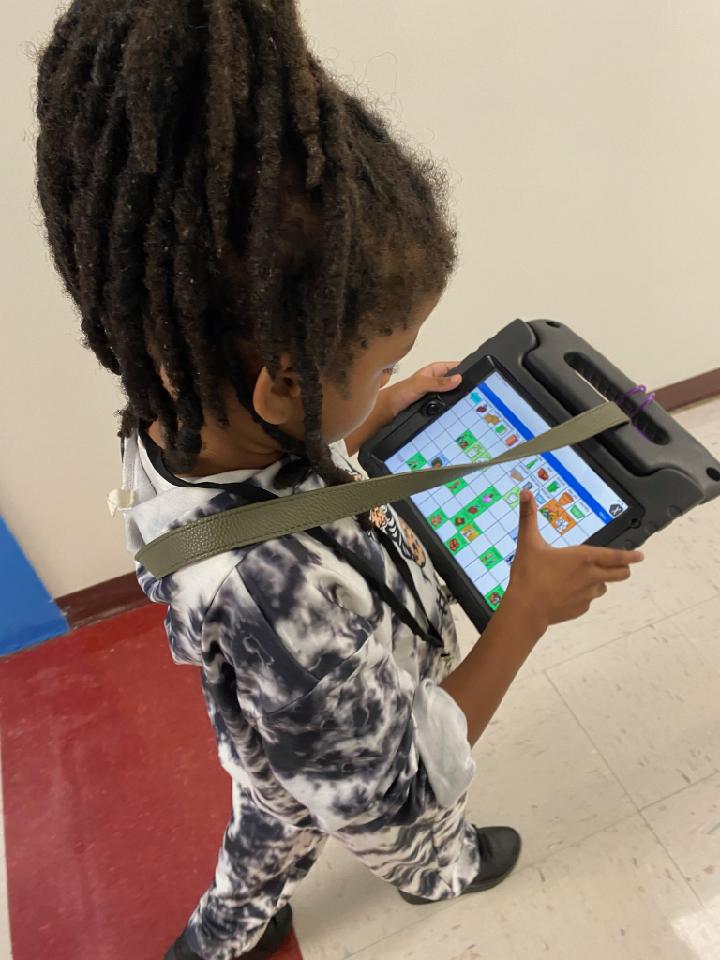


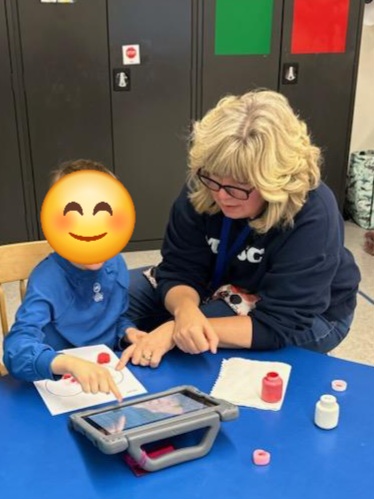
I also have a passion for coaching and supporting staff.  Many times it is just being there to listen.  It brings me great joy when staff members are communicating with students using AAC.


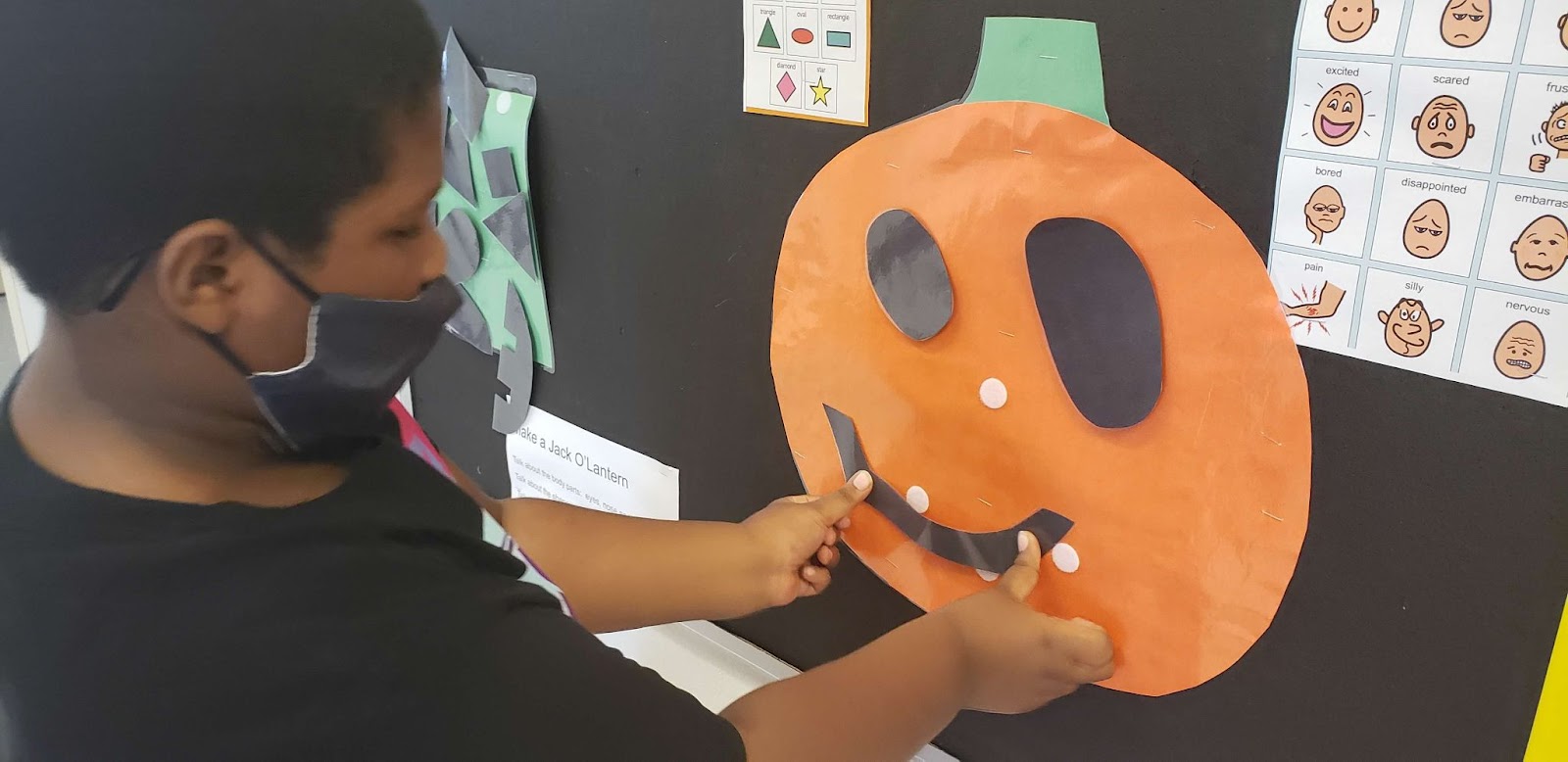
I am creative in and out of the workplace.  I love to scrapbook and work on crafts in my spare time.  One of the ways I express my creativity at work is in the Say and Play!


Say and Play Dramatic Play classroom:

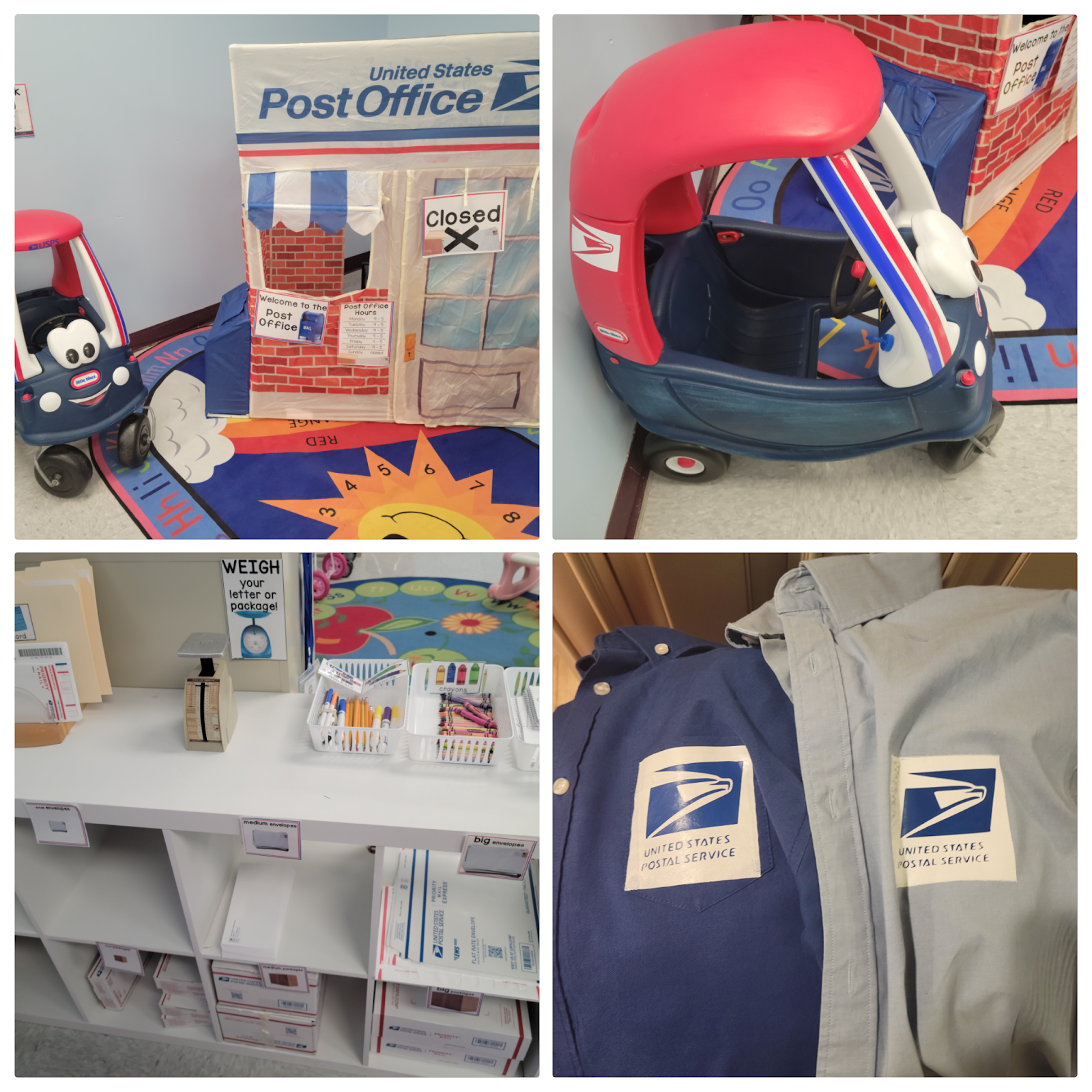
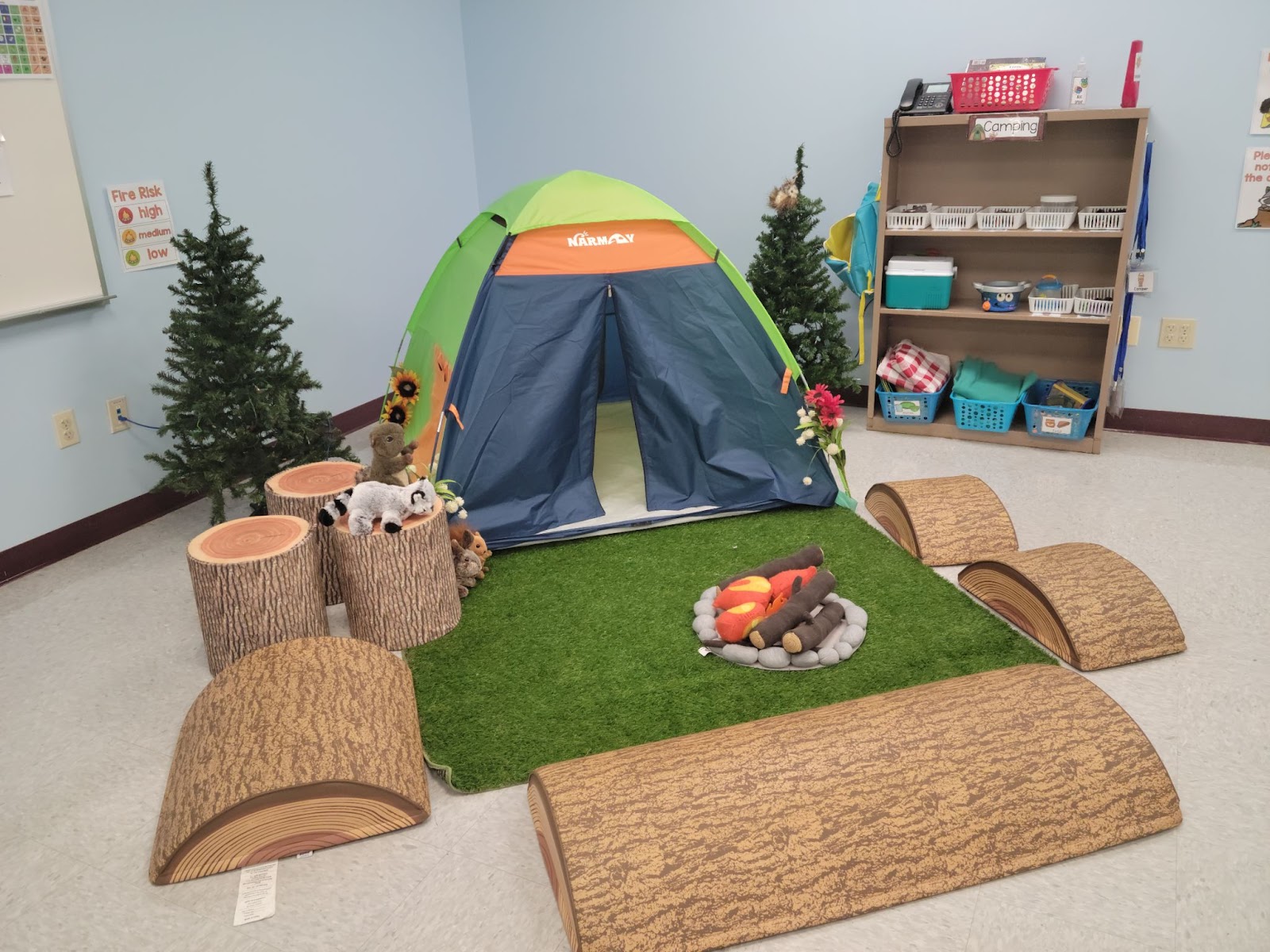
When my principal purchased some dramatic play equipment for our indoor space, I thought it would be cool to add some props to enhance language. We had a construction site and a campsite. Over the past 3 years. I have added a vet, target store, Starbucks, doctor's office, kitchen,  and nursery. The dramatic place space is now called the Say and Play.  The purpose is to model and expand language, teach and model play skills and practice social skills.  


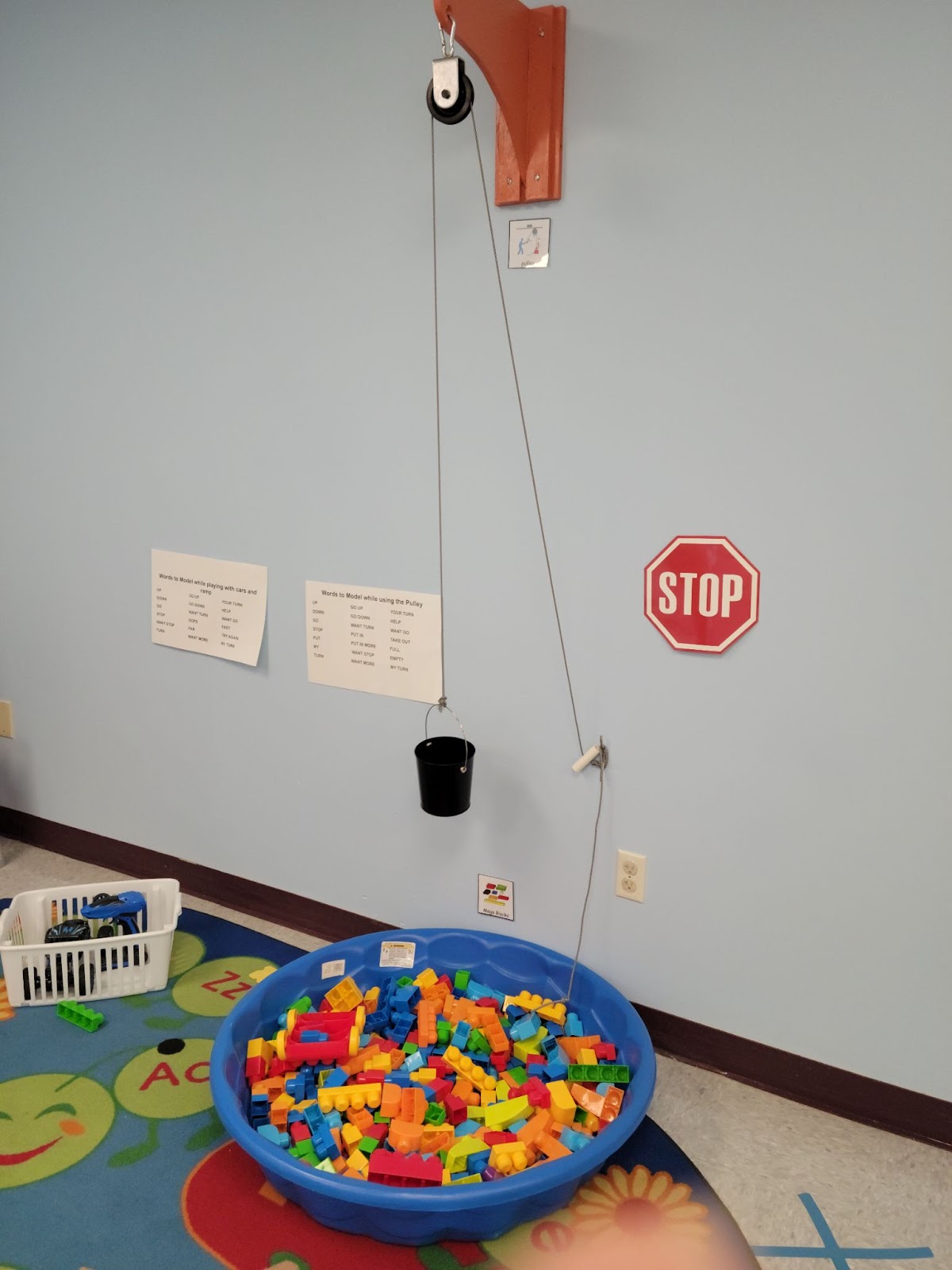
This year some of the themes are tied to the Unique Learning System curriculum. The month of October featured physical science. Our janitor helped me install a pulley system.  Through play the kids learned about simple machines. 

Facilitating Use of Core Words

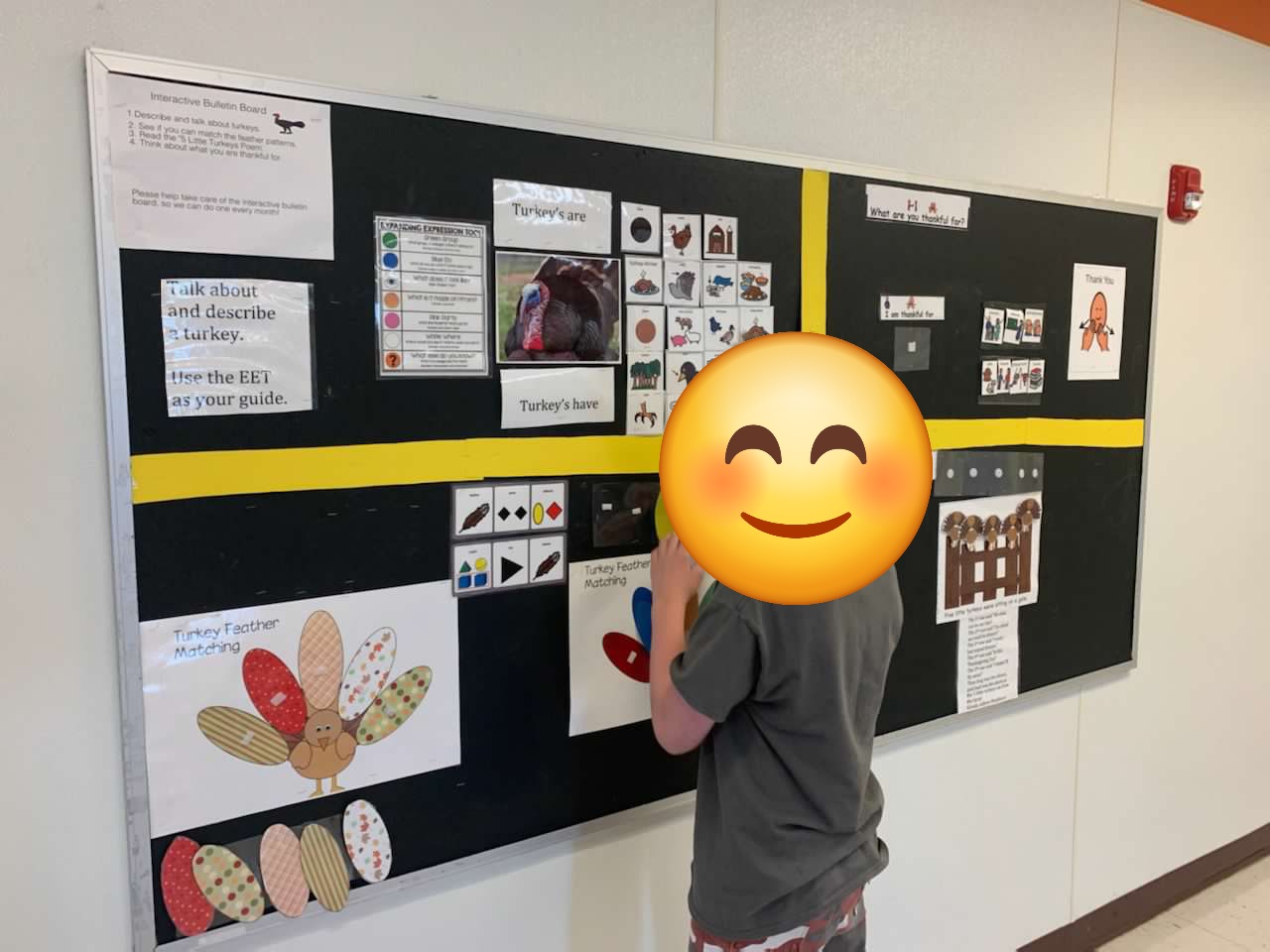
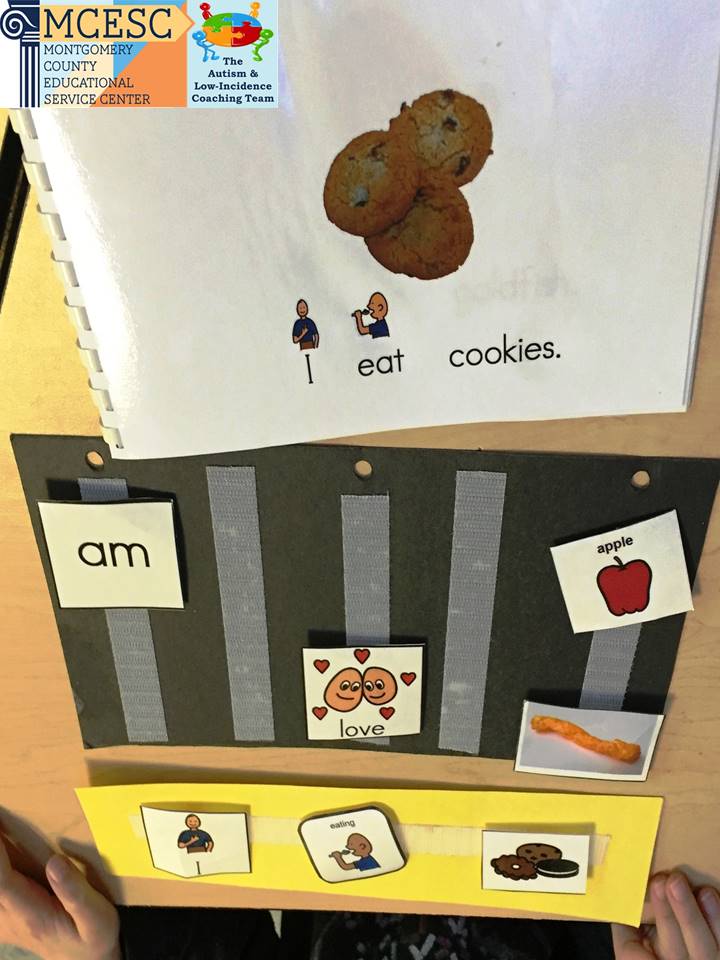
I enjoy being creative on the job!  My creativity helps keep the job fun and interesting!  Creativity is also shown through the core word of the week.  I have set up core word bulletin boards, developed core word lesson and games and created a google slide presentation with core words activities.  
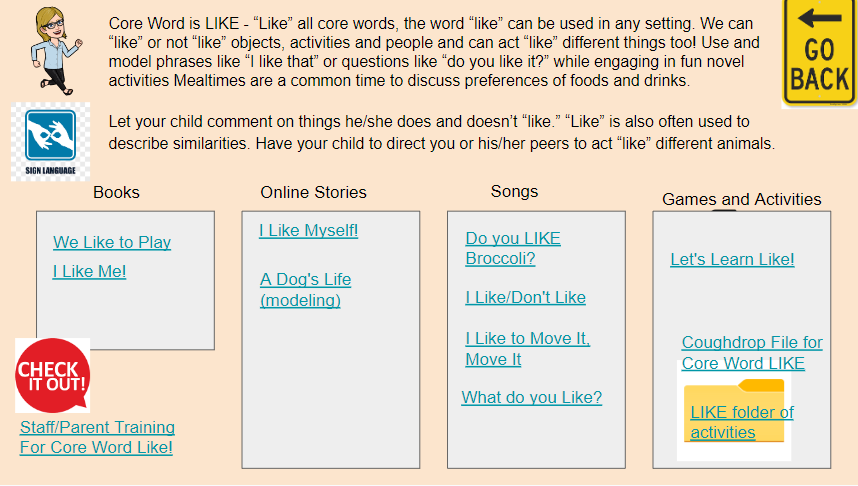


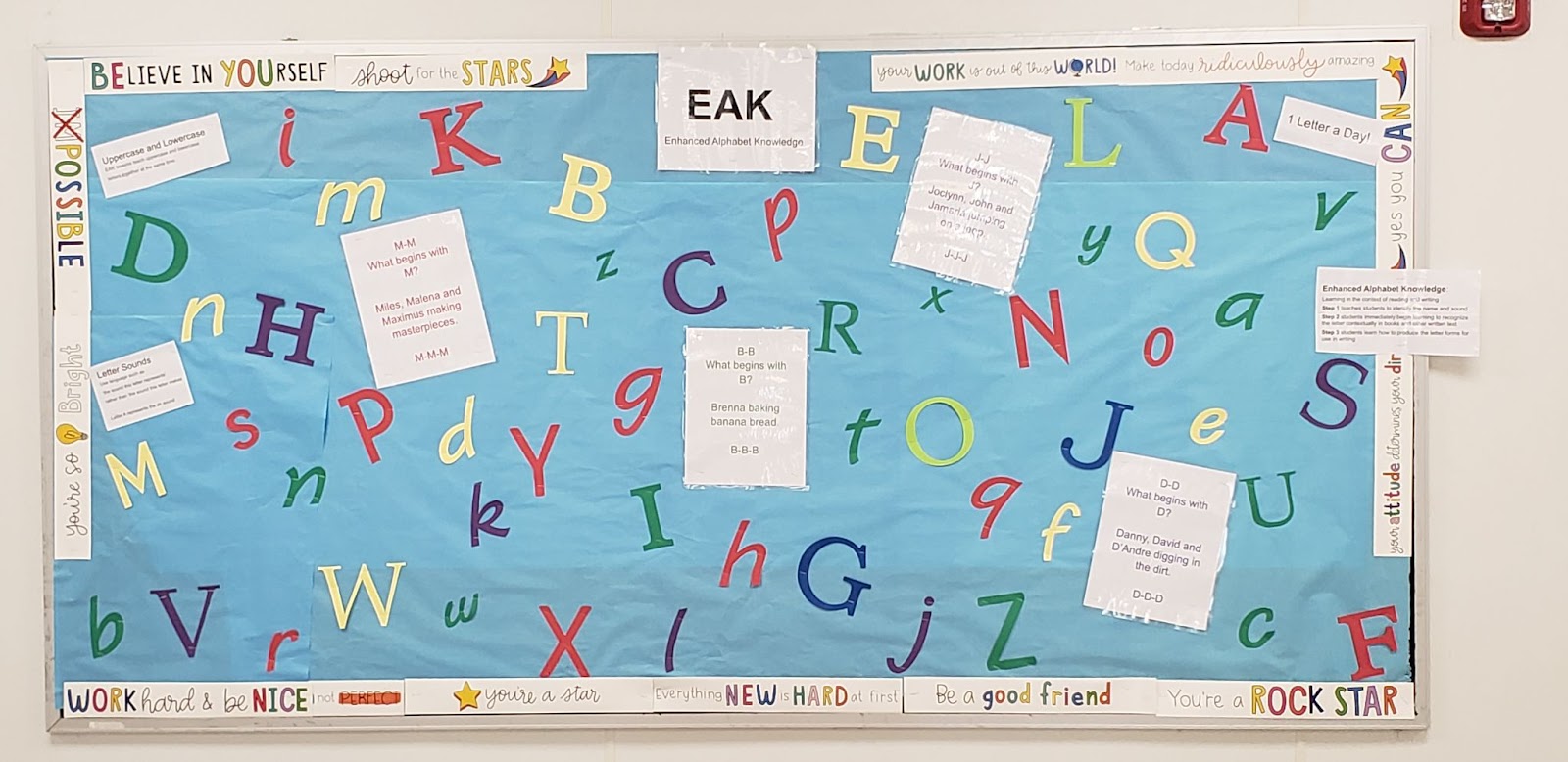
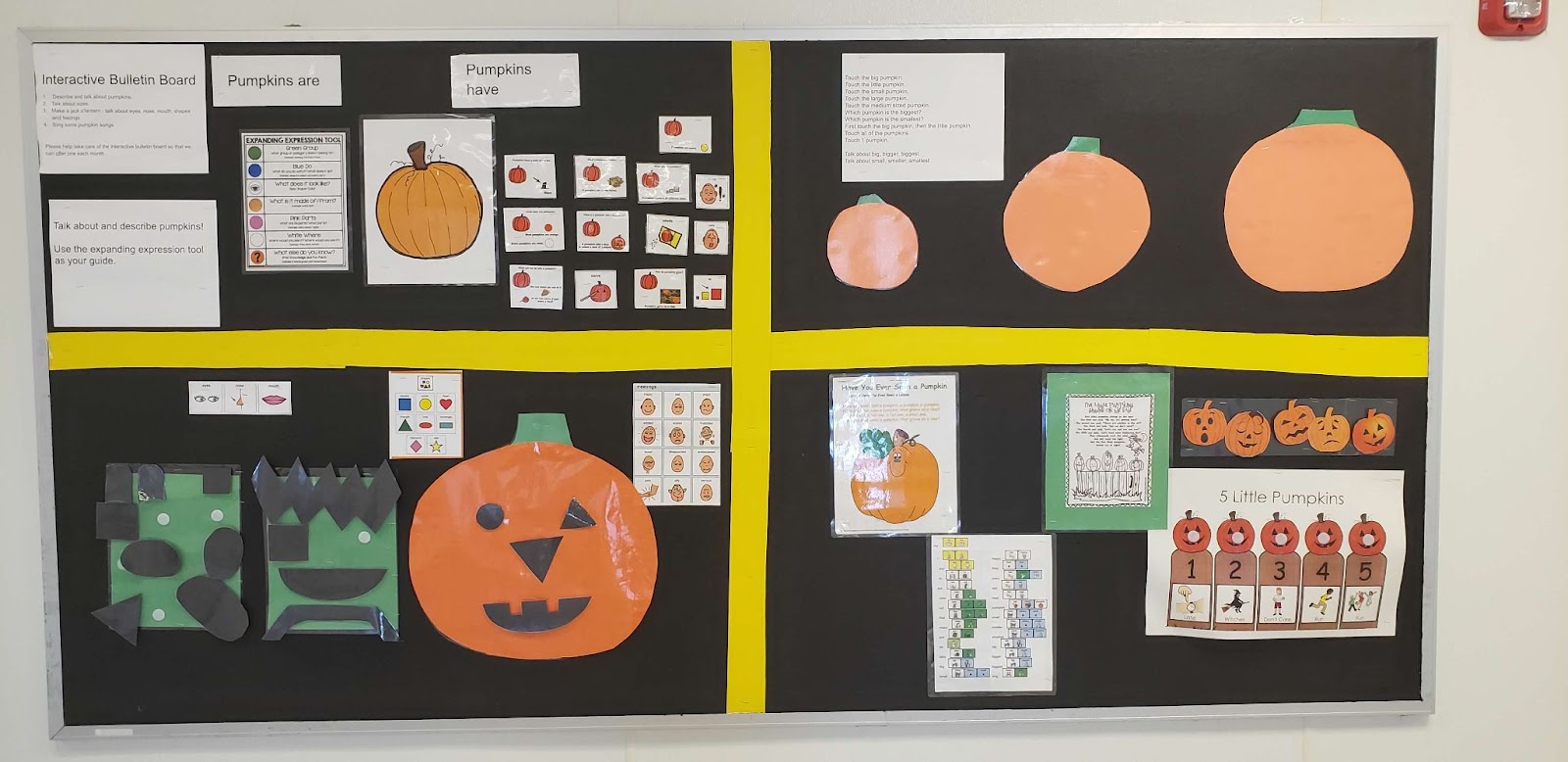
Interactive Bulletin Boards - I have also designed interactive bulletin board  that emphasize language.


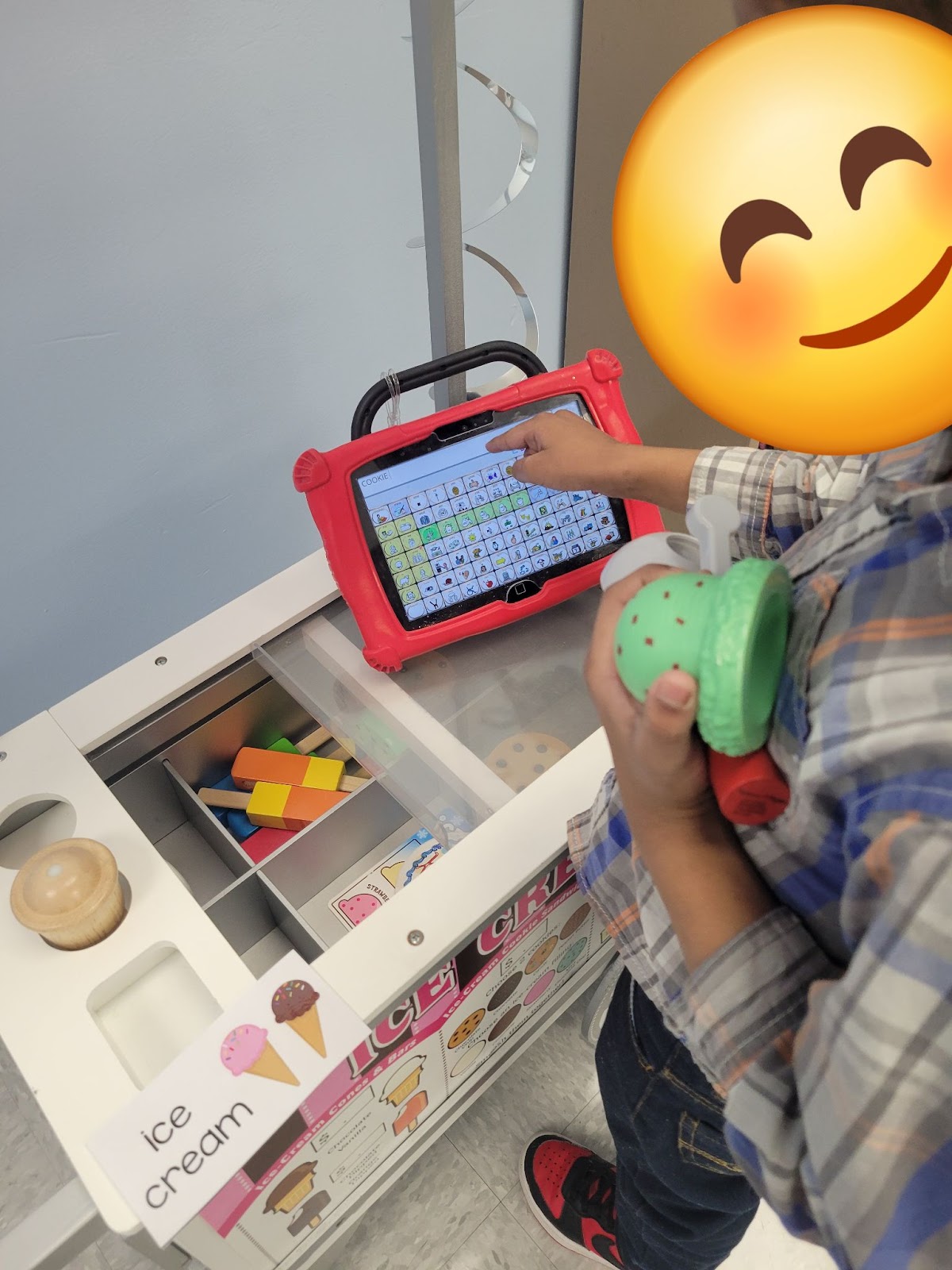
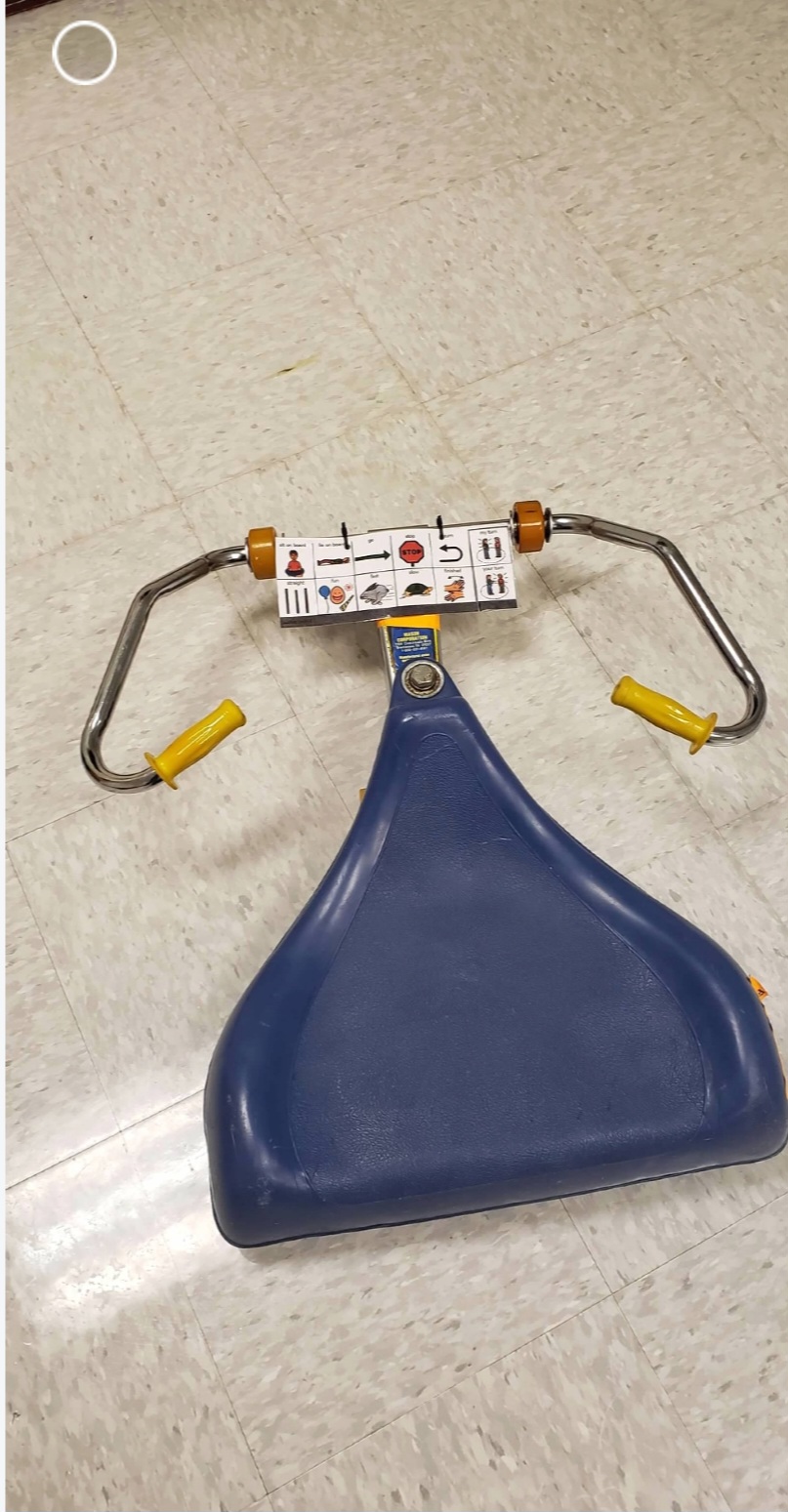
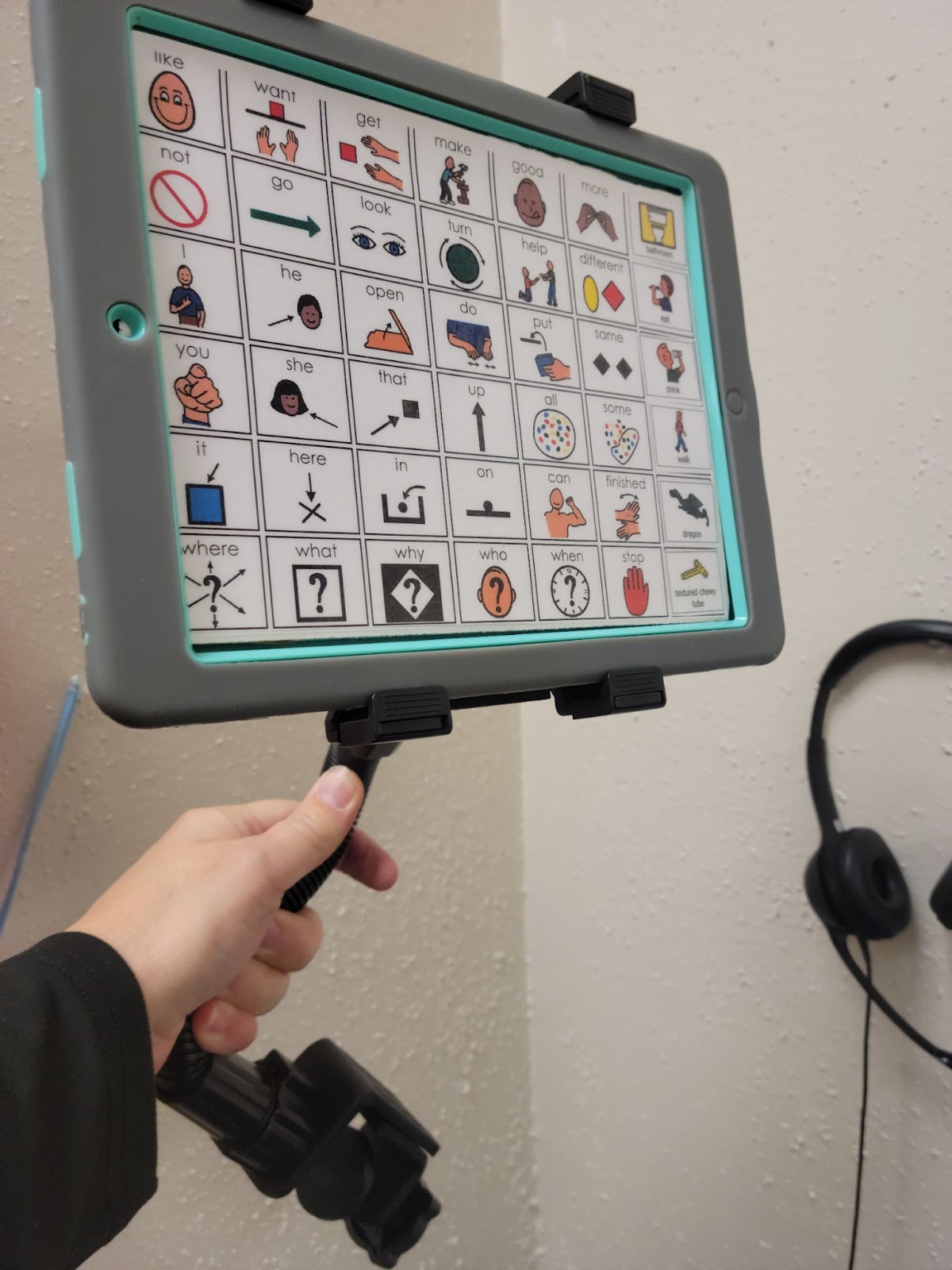
Other creative ways I incorporate communication throughout the day – I mounted a communication board to foam board and put inside an old ipad case.  You can mount to a desk with mounts found on Amazon. 

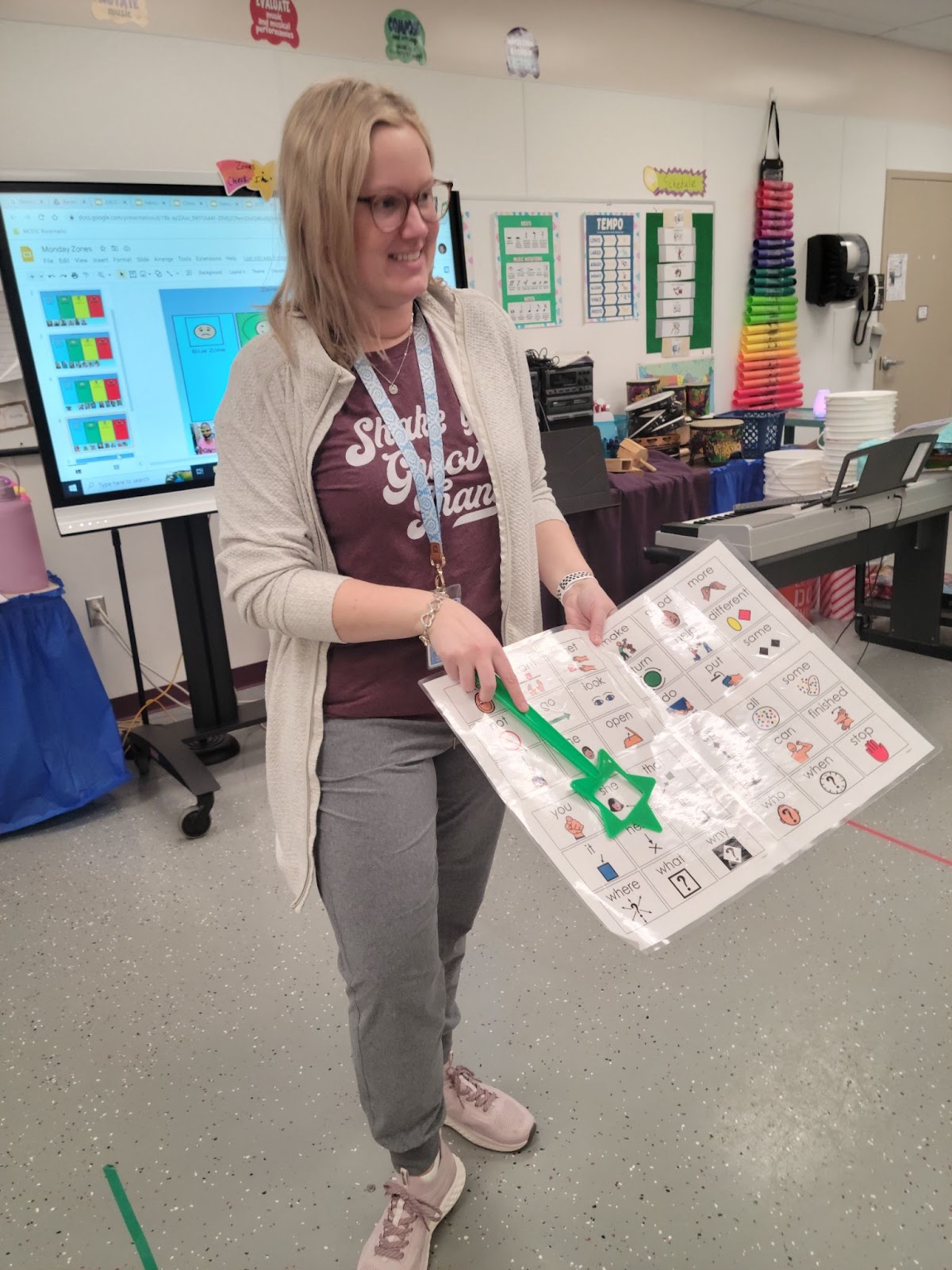
I am often told that I influence people.  I have had an influence on all staff members in my building, including administrators and related service providers.  


Our music teacher incorporates the core word of the week in her classes every week.  She works hard to make it fun and engaging for the students. 

Literacy and AAC

I have influenced teachers and other related service providers by leading a monthly book study on Comprehensive Literacy for All by Dr. Karen Erickson and David Koppenhaver. I have a passion for AAC and Literacy.  Teachers have been trying new things in their classrooms to engage students in Literacy and AAC.
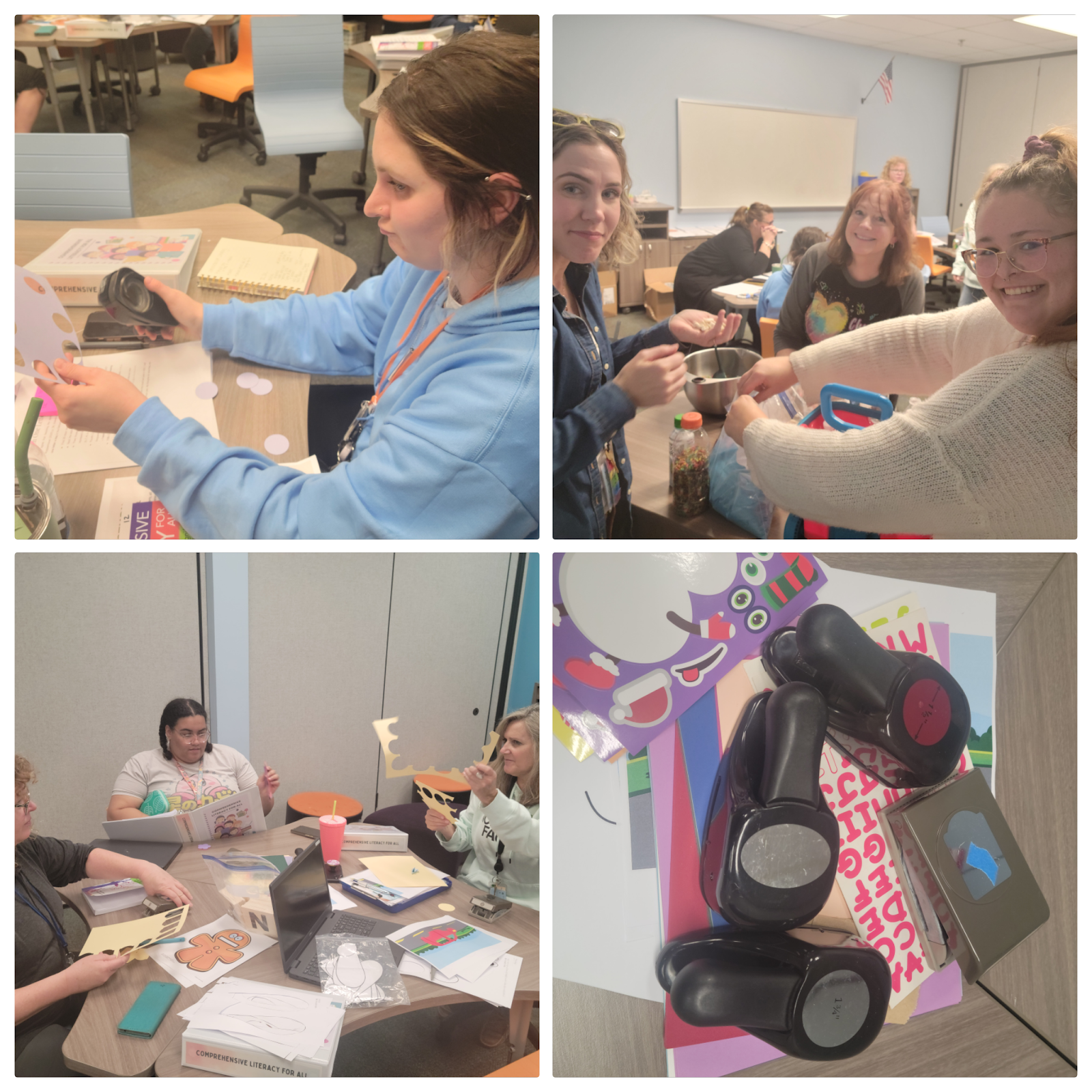

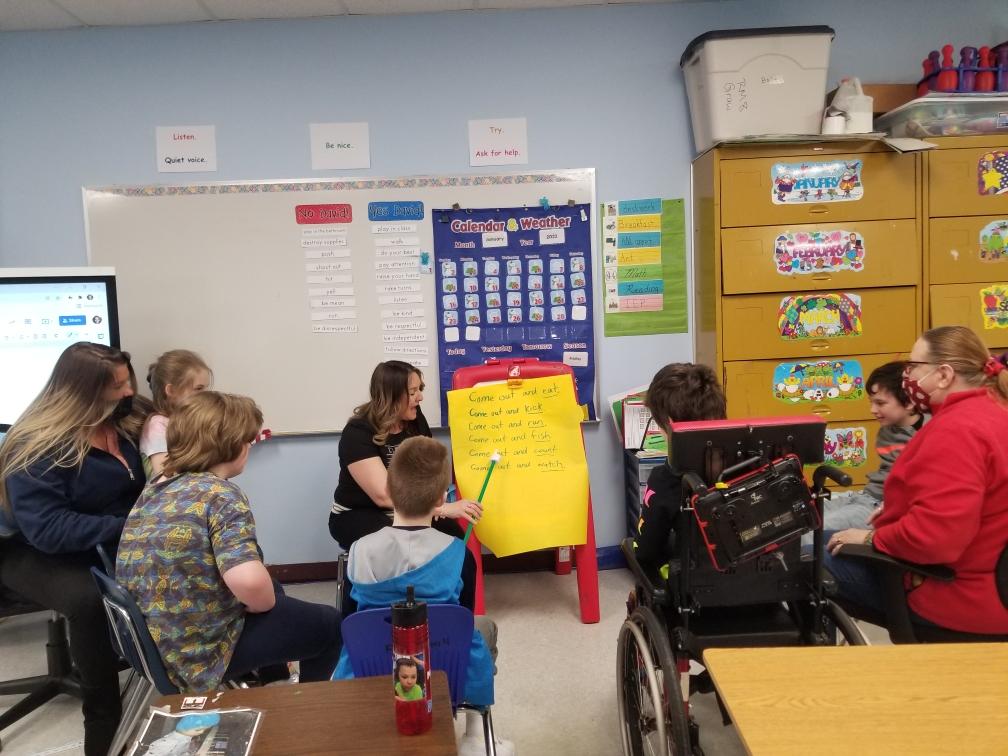

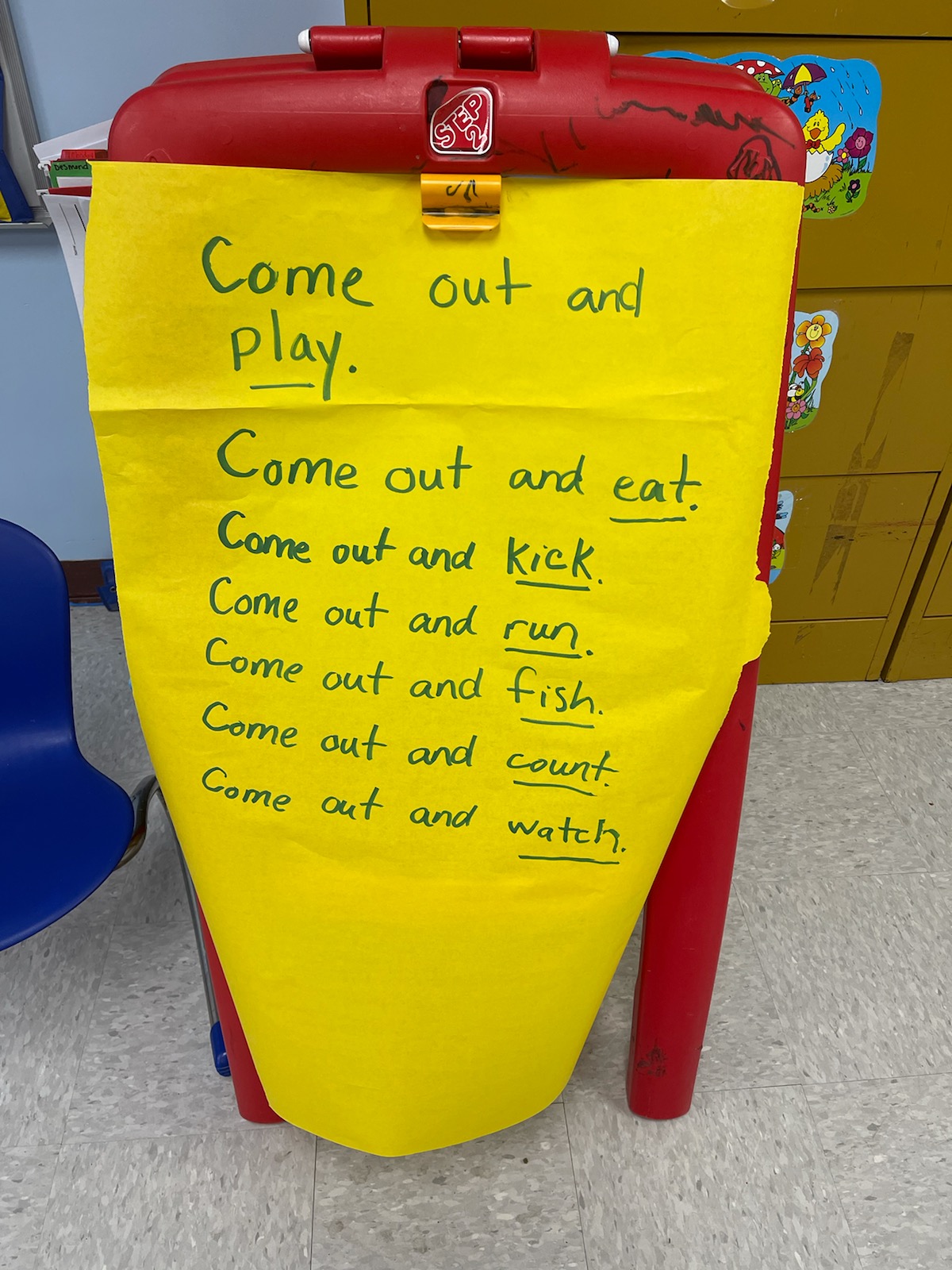
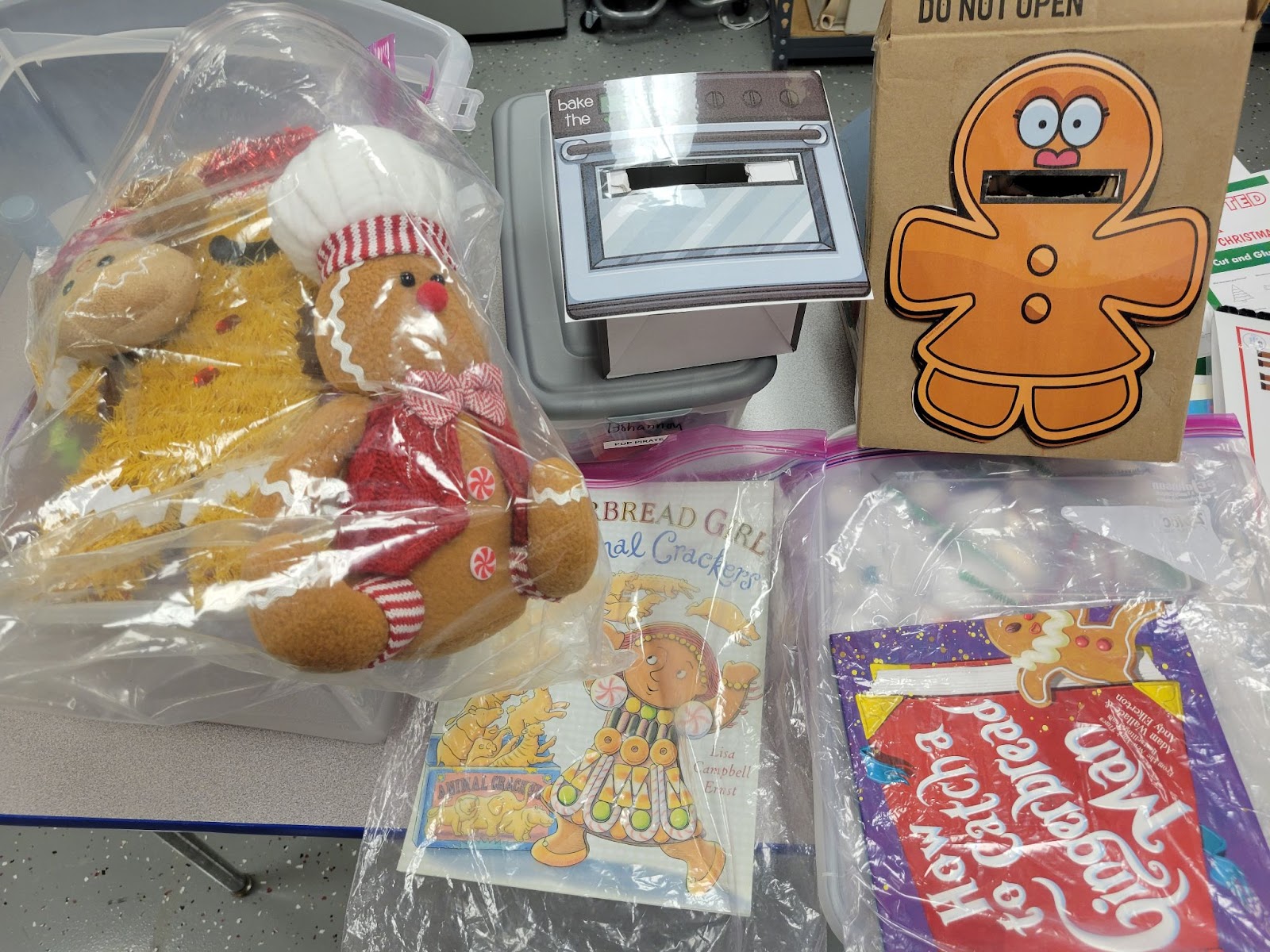
I have influenced my colleagues by creating themed lessons to be used throughout the month or by choosing a book to focus on for the month and use repetition with variety. 

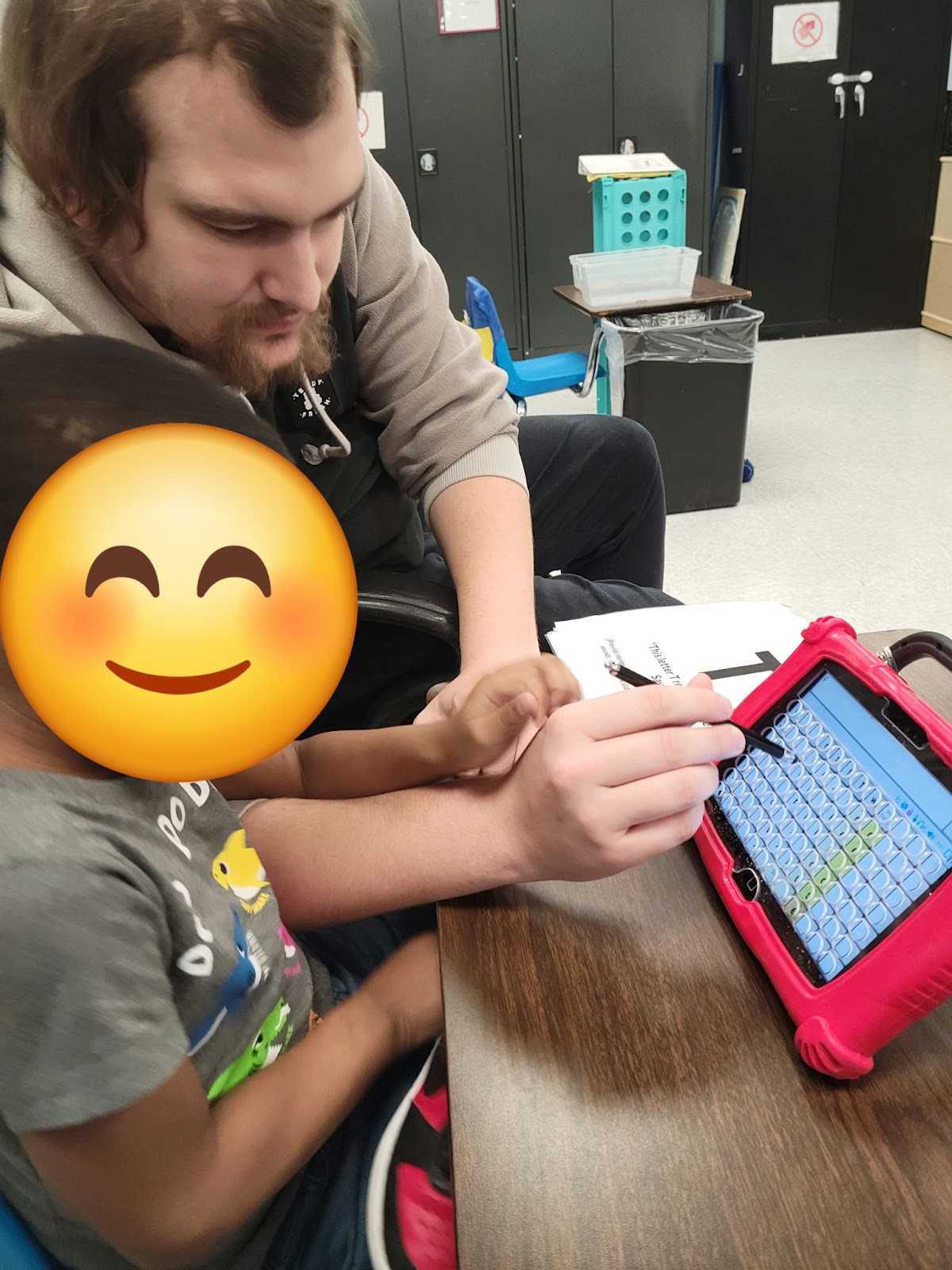
I influence staff through the coaching of AAC in the classroom during a variety of activities.  Staff is more motivated to use aided language stimulation with their students and they have seen the benefits
Our mission at MCESC Learning Centers is to serve our students so that they can succeed. As a visionary leader,  I aspire to use my enthusiasm, creativity and influence for AAC, communication and literacy to one day serve in a coaching role so that staff and students can be successful.

A huge shoutout to Laura for sharing these fabulous supports! We always love the opportunity to work with you and are so happy that you are part of our A-LIST (and MCESC family)!

Monday, February 27, 2023

A-LIST Spotlight: Carla Bryant, Speech and Language Pathologist in Miamisburg City Schools

We are very excited to be featuring Carla Bryant this month to share some of her expertise as a Speech and Language Pathologist from Miamisburg City Schools. Carla has shared some wonderful strategies for functional communication, vocabulary development, and behavioral supports in today's A-LIST Spotlight.


Visual Supports for Small Group
Carla shared, "Simply created out of necessity during covid, but have kept the structure of my groups the same ever since. I would not put myself in the “tech savvy” category. So basically, if I can do this, anyone can! The slides became a very structured and predictable way to present groups to my students. It also helped me in not having to plan something different every single week. I create 2 groups (k-2; 3-5); however, the theme is the same for both groups. Once a “theme” is established, the only slides that change are the story and special activity. We sing the same song every week to greet, talk about how we are feeling for the day, then based on the theme, we have signing time, a story, and a special activity (typically a craft). If we are lucky enough to have time left over, someone gets to pick the movement song to finish the group. I also created a binder for the students to follow along and/or provide a way for my nonverbal kiddos to respond."


Individualized Supports for Students
Carla shared, "A student who had significant communication delays and a significant visual impairment came onto my caseload recently. Through research, I came across this 3D tactile communication system geared for students with significant disabilities (those not using speech, sign language, or symbols to communicate). They provide files that can be printed of the symbols you want to target. The files given are for 36 words in the Universal Core vocabulary. The symbols are three-dimensional (3D) symbols that are printed with a different shape, texture and color to indicate the word category. Each symbol includes a unique raised element, the printed word and braille to make the individual word. More information can be found here: https://www.project-core.com/ about-project-core/"


"I created a few object schedule pieces for a student who had increased anxiety about transitioning between environments and activities. The objects provided a symbol-based communication system for him. The objects chosen were considered to be enjoyable and rewarding for him. The object symbols provided him with predictability in his transitioning to the next activity, gave him the ability to make choices, which decreased his anxiety and allowed him to know what was happening next in his routine."


Core Boards
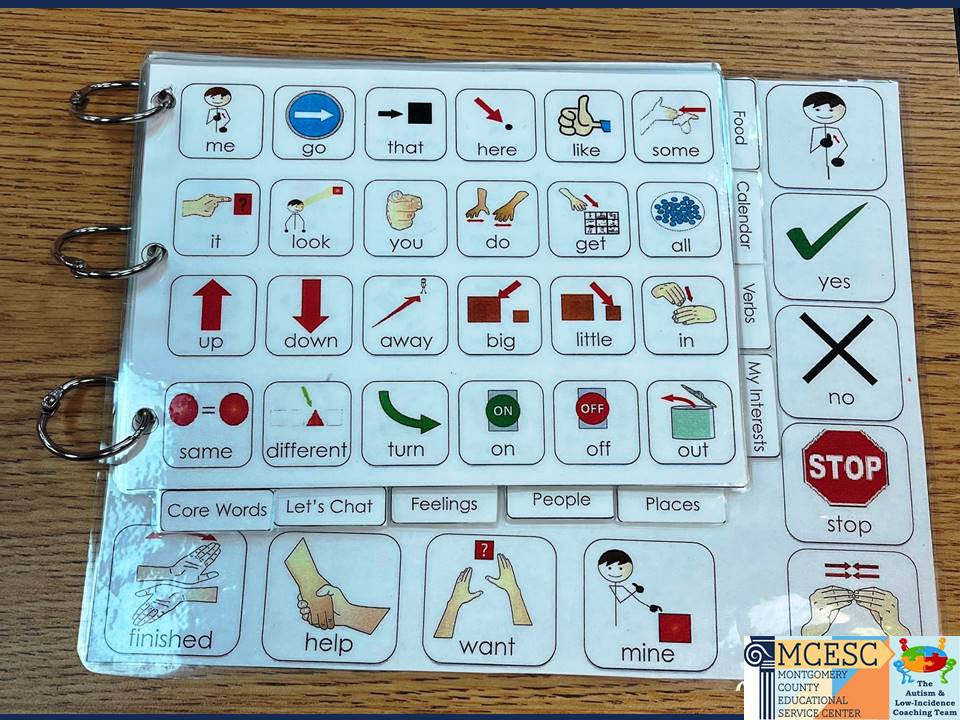
Carla shared, "I recently added a large poster board to a classroom of nonverbal students. A poster is very visible and allows for AAC to be constantly available for all students to use throughout the day. It also allows for the teacher to model when presenting to the class during groups and/or special activities. The core boards are also on the students desks for easy accessibility. Benefits of having a poster core board are: you can use with students that do not yet have their own AAC system, you can model on these communication boards when the AAC user doesn’t want you to use their AAC, and the student can use the board when their AAC device is not charged, broken or unavailable."


Whole class core board for modeling:


"Don't Leave Home Without Them!" Visual Supports
Carla shared these as her "Don't leave home without them" visuals! They provide structure and predictability for all students. They are used in a variety of settings (therapy, classroom, & home) with all ages of students, preschool through adulthood. Visuals allow for less auditory (which can be super difficult because we all like to talk) and provide a sequence of events for the student to be able to recognize and understand. When the ACT team is out to observe, it is evident that these tools are used consistently and effectively!


Carla is a great advocate for our favorite strategies so we are always happy when she is part of the team! She works hard to teach her students functional communication skills and collaborates with the educational team to be sure these skills can transfer across settings. Thanks for all you do, Carla!

Monday, January 9, 2023

Academic Area: Systematically Teaching Functional Sight Words

For many of our students, new skill acquisition requires a great deal of repetition. It is important that for these students, instruction is deliberately planned and systematically carried out in order to best meet their learning needs and to ensure the most accurate monitoring of progress. Today's Academic Area provides guidelines and examples for Systematically Teaching Functional Sight Words. 


For some students, it is important to focus on functional sight words that have the most meaning for them. These may be words they find motivating (such as food words or the names of friends or family members) or they may be words they need to apply in everyday situations (such as core words, grocery words, or clothing words). When teaching functional sight words, follow this systematic plan:

1. Pre-Assessment

·         Assess student knowledge of target sight words using a list or flashcards. Record baseline data.

Allison Officer
Stevenson Elementary, Mad River

2. Direct Instruction

·         Refer to baseline data to choose which words to provide direct instruction on. Focus on 1-2 words per teaching session.

·         Ask the student to match the target sight word flashcard to a corresponding picture or icon.

·         Repeat 3-5 times until the student demonstrates fluency.


3. Matching with Distractors

·         Incorporate 1-2 previously mastered words into the picture-matching practice.

·         Mix up cards frequently to keep the student engaged and focused.

·         Repeat mixing and matching 3-5 times until the student demonstrates fluency.

Allison Officer
Stevenson Elementary, Mad River

4. Receptive Identification

·         Provide a field of 3-5 flashcards and ask the student to receptively identify (i.e. “find”, “point to”, “give me”) a sight word upon request. You can also use a sight word board for students to point to or circle the requested word. 

Allison Officer
Stevenson Elementary, Mad River


Allison Officer
Stevenson Elementary, Mad River


·         Repeat mixing and receptively identifying 3-5 times until the student demonstrates fluency.


5. Expressive Identification

·         Display one flashcard at a time and have the student expressively identify each flashcard.


6. Generalization

·         Generalize new sight word knowledge through a variety of activities including worksheets, sentence comprehension, word searches, interactive books, games, or finding within a text.


Lisa Orem
Dublin City Schools

Allison Officer
Stevenson Elementary, Mad River

Allison Officer
Stevenson Elementary, Mad River

Allison Officer
Stevenson Elementary, Mad River

Allison Officer
Stevenson Elementary, Mad River

Allison Officer
Stevenson Elementary, Mad River

Allison Officer
Stevenson Elementary, Mad River

Allison Officer
Stevenson Elementary, Mad River

Taylor Ruef
Stevenson Elementary, Mad River

Cynthia Resch
Learning Center- West, MCESC

Cynthia Resch
Learning Center- West, MCESC

7. Post-Assessment

·         Re-assess student knowledge of target sight words using a list or flashcards. Record progress.


These steps provide a task analysis of the teaching sight words that can also be a helpful guide in developing student IEP goals.   

If you have students who need further differentiation, you can provide picture-supported text to suppor them. 

Allison Officer
Stevenson Elementary, Mad River

Allison Officer
Stevenson Elementary, Mad River

Allison Officer
Stevenson Elementary, Mad River

Allison Officer
Stevenson Elementary, Mad River

Lisa Orem
Dublin City Schools

Lisa Orem
Dublin City Schools

Allison Officer
Stevenson Elementary, Mad River


For more ideas on how to make reading accessible to your students, check out our previous Academic Area Posts:

Reading

Phonics