To start this school year, our team is compiling some of our best examples of supports we have seen in our districts and featured in previous blog posts. Today we are highlighting all of our Best Organization Station Blog Posts for Classroom Organization.
Click on the hyperlink under each heading below to be taken to the related post on that topic.
One of our favorite strategies for communicating clear expectations to students during task times is the Structured Work System. In fact this is one of our most recommended strategies and some of the most commonly loaned materials from our ACT Lending Library.
However, because this is one of our most commonly recommended strategies, we have certainly encountered some common myths and mistakes when implementing it. Today's Organization Station will clear up any myths and help to remedy mistakes to assist teams in implementing this great strategy more effectively.
Myth #1: You Have to Have A Designated Structured Work System Station in the Classroom
Some teams are hesitant to implement structured work systems because they don't feel they have enough room for a structured work system station. We have seen many teams have success with portable structured work systems such as:
rolling carts
Anjie Rose Schnell Elementary, West Carrollton
binders
Laurie Maravetz Schaefer Middle School, Springfield
folders
Lisa Bauer Northmont Middle School, Northmont
table top drawers
Heather Wessels Greenon Preschool, Greenon
or even students traveling to get tasks and then returning to their desks.
Rylie Jarrett Stevenson Elementary, Mad River
Jackie Vollmer Driscoll Elementary, Centerville
An added benefit of some of these more portable systems is they can travel with the student to different classrooms or related service sessions! This student did so well with his structured work system that he was even able to use it on the playground to redirect eloping behaviors!
Myth #2: Structured Work Systems Have to Be Used Independently
Structured work systems are an excellent way to set up work for students to complete independently because the format is predictable and easy to follow. However, this also makes it an excellent strategy to implement during group or 1:1 time!
Heather Clark Saville Elementary, Mad River
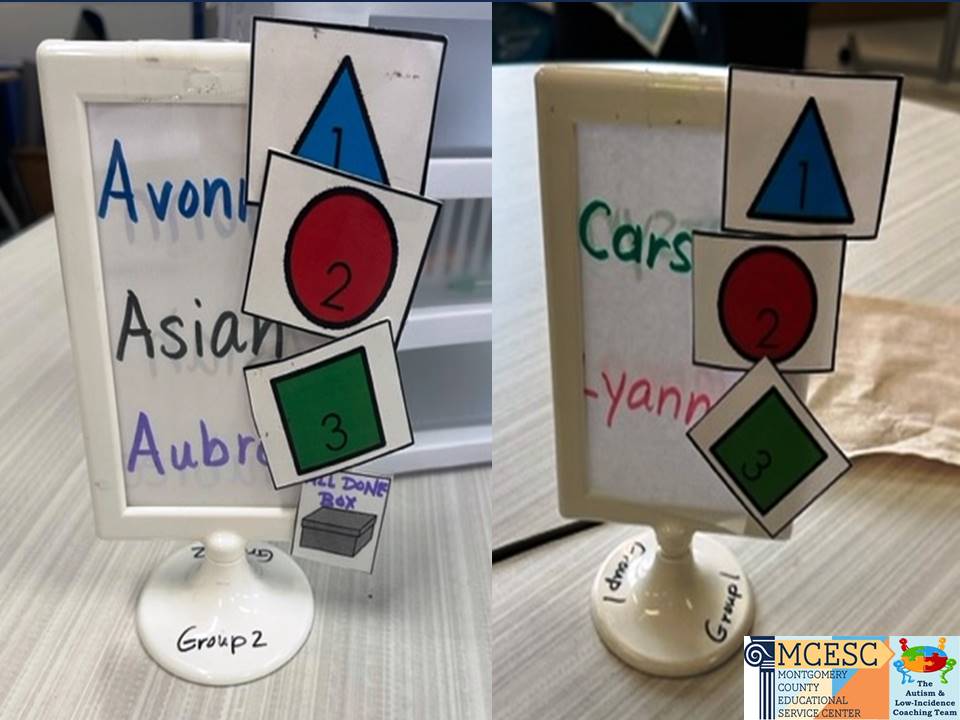
We often recommend using a 1-2-3 work structure for all work times throughout the day so that students know every time they need to work they have to follow the same schedule. This greatly reduces escape behaviors and increases environmental predictability.
Genevieve Harvey West Carrollton ECC, West Carrollton
Heidi Horner Nevin Coppock Elementary, Tipp City/Miami County ESC
In large group settings, a written structured work system can be just as effective for communicating expectations to the whole class.
Caitlyn Imhoff New Lebanon Middle School, New Lebanon
Myth #3: You Can Only Use Task Boxes for Structured Work Systems
Many teams get nervous when we recommend structured work systems because they envision needing to create a great deal of additional materials and work tasks. Although task boxes can be one type of task used in a structured work system, we assure you that literally ANY task can be used including:
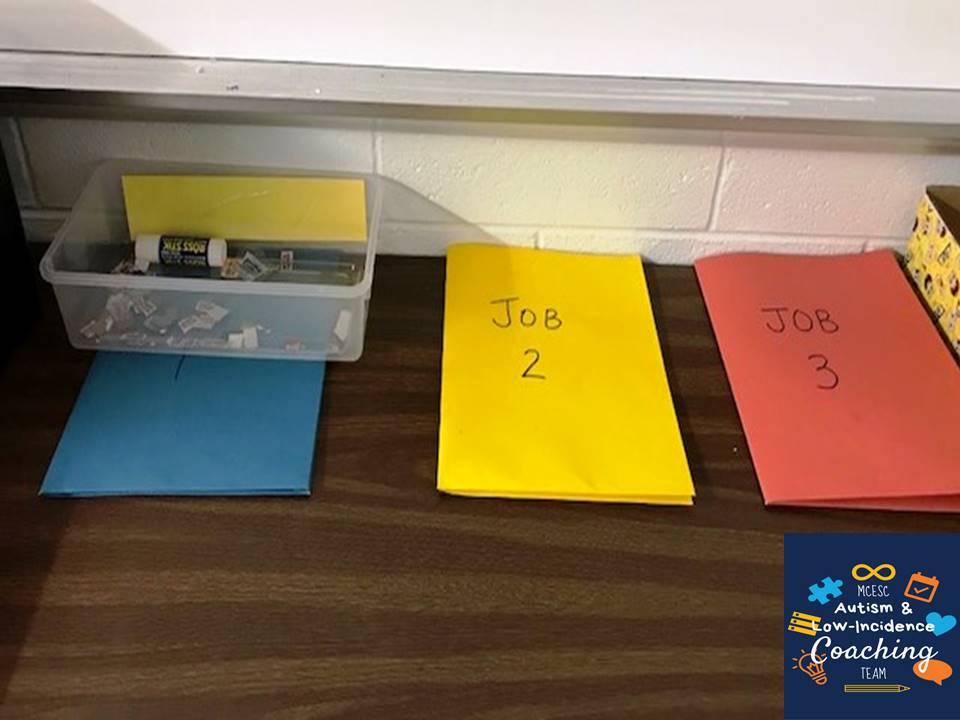
file folders
Jenna Fitch Demmitt Elementary, Vandalia
velcro boards
Jenna Fitch Demmitt Elementary, Vandalia
puzzles
Jackie Vollmer Driscoll Elementary, Centerville
Heather Wessels Greenon Preschool, Greenon
vocational tasks
Brittany Wendling Valley Elementary, Beavercreek
Libby Wasserman Springfield High School, Springfield
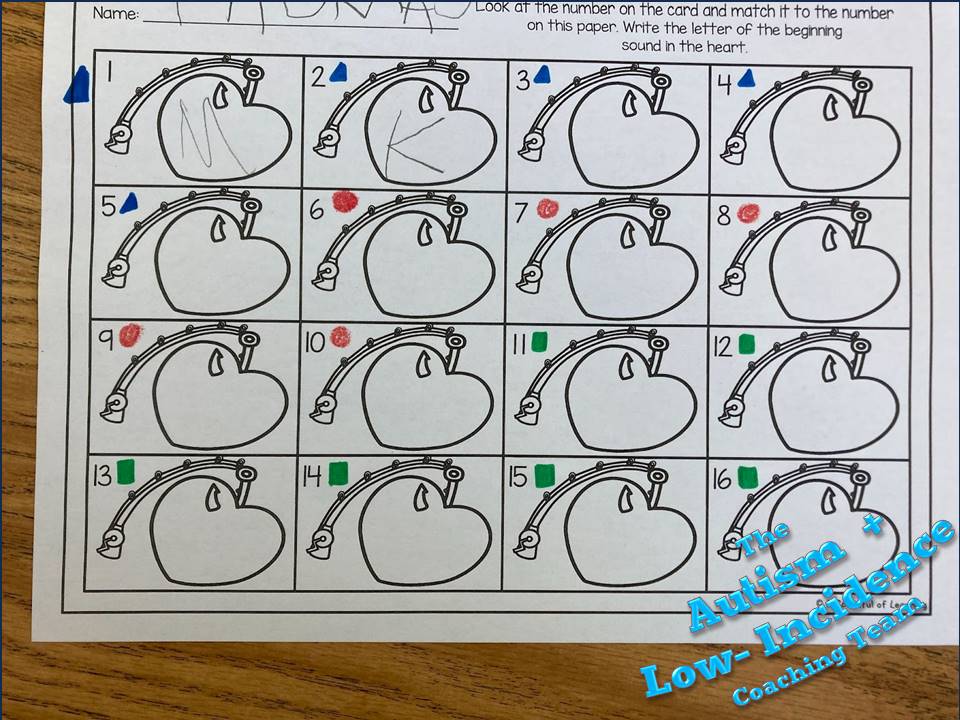
worksheets
Julia Spencer Fairborn Primary, Fairborn
Brittany Wendling Valley Elementary, Beavercreek
computer work
Cassandra Hebauf Northmoor Elementary, Northmont
fine motor tasks
Jackie Vollmer Driscoll Elementary, Centerville
Jenna Fitch Demmitt Elementary, Vandalia
Debi Gnau Mad River ECC, Mad River
Jackie Vollmer Driscoll Elementary, Centerville
books
Rose Jepson Northridge Elementary, Northridge
Unique Learning System
Jamie Minnish Prass Elementary, Kettering
sensory activities
Allysson Leapley Tipp High School, Tipp City
Heather Balkcom Springcreek Primary, Piqua
art projects
Debi Gnau Mad River ECC, Mad River
Myth #4: Each Drawer/Bin Needs A Separate Task
When students are first learning the structured work system and are working to build their time on-task stamina, they may need a single task divided up in their structured work system.
Amanda McCormick Driscoll Elementary, Centerville
Now that we have reviewed some of the myths, let's look at some of the common structured work system mistakes and more importantly how to avoid them!
Mistake #1: Putting Too Much Work in a Single Drawer/Bin
Often the purpose of a structured work system is to clearly communicate work expectations to a student. They know that they have to do the set sequence of work and then they are finished. However, at times we will see staff use the structured work system as storage for all of the students' tasks for the day or even the week! This can be extremely overwhelming because some students may look in their drawer or bin and see a whole stack of work and become agitated. This can often lead to escape behaviors even if staff tries to explain they only have to do one of the tasks in the drawer.
We know organizing work for the structured work system can be a challenge. We love this idea of having a separate drawer system to organize assignments that can easily be accessed and placed in the bins when needed.
Rose Jepson Northridge Elementary, Northridge
Mistake #2: Giving Up on Implementing the Structured Work System Too Soon
Like any new strategy, the structured work system can take time for the student to get used to especially if they are used to engaging in escape behaviors to avoid work tasks. It can take 4-6 weeks of consistent implementation of a support to determine true effectiveness. Some ways to increase success can include:
Reduce the task expectations. As we mentioned earlier in this post, you can use a single task and break it up between all three drawers to build positive momentum and teach the system.
Incorporate special interests by using special interest icons or preferred activities as work tasks. For example, instead of using numbered 1-2-3 icons on the bins, you can use Paw Patrol or Pokemon icons. And instead of having worksheets in each bin, you can start with a favorite puzzle or even a fun activity like Mr. Potato Head.
Sarah Janosik Tipp High School, Tipp City/Miami County ESC
Cynthia Resch Learning Center West, Montgomery County ESC
Carrie Prickett Jane Chance Elementary, Miamisburg
Debi Gnau Mad River ECC, Mad River
Jackie Vollmer Driscoll Elementary, Centerville
For some students, you may want to incorporate reinforcement for every drawer/bin completed to build positive momentum.
Beth Young Snyder Park Elementary, Springfield
Some teams give students shared control by allowing them to choose the order in which they will complete their work tasks. They present the tasks and let the students place them in the bins or drawers in their own order.
Jared Taylor Simon Kenton Elementary, Springfield
Mistake #3: Undoing Student Work In Front of Them
This devalues the student's efforts. And it can also teach the student to undo their work which is troublesome if at any point you are having them work independently and you want to check their work later. Part of teaching the structured work system should be having a clearly defined finished location for the student to place finished work so it can be checked and reset later.
Peggy Ristau Brookville Intermediate, Brookville
Heidi Horner Nevin Coppock Elementary, Tipp City/Miami County ESC
Vince Lintner Miamisburg High School, Miamisburg
Sara Moore Bell Creek Intermediate, Bellbrook
However, don't forget to reset the work before the next time you put it in the structured work system! It can be very frustrating for students to see you take apart the task immediately before they have to put it back together.
Mistake #4: Forgetting to Incorporate Reinforcement
Many students who engage in escape behaviors are often tangibly motivated. Meaning they want to escape schoolwork to do what they want to do. Allow students to choose what they want to work for prior to working. Then, place an icon on their structured work system work strip and/or place the reinforcing item in a 4th bin at the end of the structured work system to clearly communicate when all of the structured work tasks are done, then they will get their tangible item or activity.
Rose Jepson Northridge Elementary, Northridge
Brittany Wendling Valley Elementary, Beavercreek
Taylor Ruef Stevenson Elementary, Mad River
Tammy Flanegin Enon Primary, Greenon
Taylor Ruef Stevenson Elementary, Mad River
Heidi Horner Nevin Coppock Elementary, Tipp City/Miami County ESC
Heidi Horner Nevin Coppock Elementary, Tipp City/Miami County ESC
Molly Stanifer & Michelle Barnhart Bell Creek Intermediate, Bellbrook
Mistake #5: The Student Doesn't Interact with the Work Strip Or Uses an Incorrect Sequence
For most students, we recommend a matching structured work system. The steps of a matching structured work system include:
Take the first icon off the work strip.
Match it to the corresponding bin/work strip.
Take out the work.
Complete the work.
Put completed work in the finished location.
Repeat sequence for second icon.
Repeat sequence for third icon.
When all icons are removed from the work strip and all of the work is completed, the final icon on the work strip should be the reinforcer as explained in Mistake #4.
Heidi Horner Nevin Coppock Elementary, Tipp City/Miami County ESC
This is a great video illustrating the sequence:
Learn more tips for setting up structured work systems in our previous posts:

.png)





.JPG)


.JPG)


.JPG)


