For many of our students, new skill acquisition requires
a great deal of repetition. It is important that for these students,
instruction is deliberately planned and systematically carried out in order to
best meet their learning needs and to ensure the most accurate monitoring of
progress. Today's Academic Area provides guidelines and examples for Systematically Teaching Functional Sight Words.
For some students, it is important to focus on
functional sight words that have the most meaning for them. These may be words
they find motivating (such as food words or the names of friends or family
members) or they may be words they need to apply in everyday situations (such
as core words, grocery words, or clothing words). When teaching functional
sight words, follow this systematic plan:
1.
Pre-Assessment
·
Assess student
knowledge of target sight words using a list or flashcards. Record baseline
data.
 |
Allison Officer
Stevenson Elementary, Mad River |
2.
Direct Instruction
·
Refer to baseline
data to choose which words to provide direct instruction on. Focus on 1-2 words
per teaching session.
·
Ask the student
to match the target sight word flashcard to a corresponding picture or icon.
·
Repeat 3-5 times
until the student demonstrates fluency.
3.
Matching with Distractors
·
Incorporate 1-2
previously mastered words into the picture-matching practice.
·
Mix up cards
frequently to keep the student engaged and focused.
·
Repeat mixing and
matching 3-5 times until the student demonstrates fluency.
 |
Allison Officer
Stevenson Elementary, Mad River |
4.
Receptive Identification
·
Provide a field
of 3-5 flashcards and ask the student to receptively identify (i.e. “find”,
“point to”, “give me”) a sight word upon request. You can also use a sight word board for students to point to or circle the requested word.
 |
Allison Officer
Stevenson Elementary, Mad River |
 |
Allison Officer
Stevenson Elementary, Mad River |
·
Repeat mixing and
receptively identifying 3-5 times until the student demonstrates fluency.
5.
Expressive Identification
·
Display one
flashcard at a time and have the student expressively identify each flashcard.
6.
Generalization
·
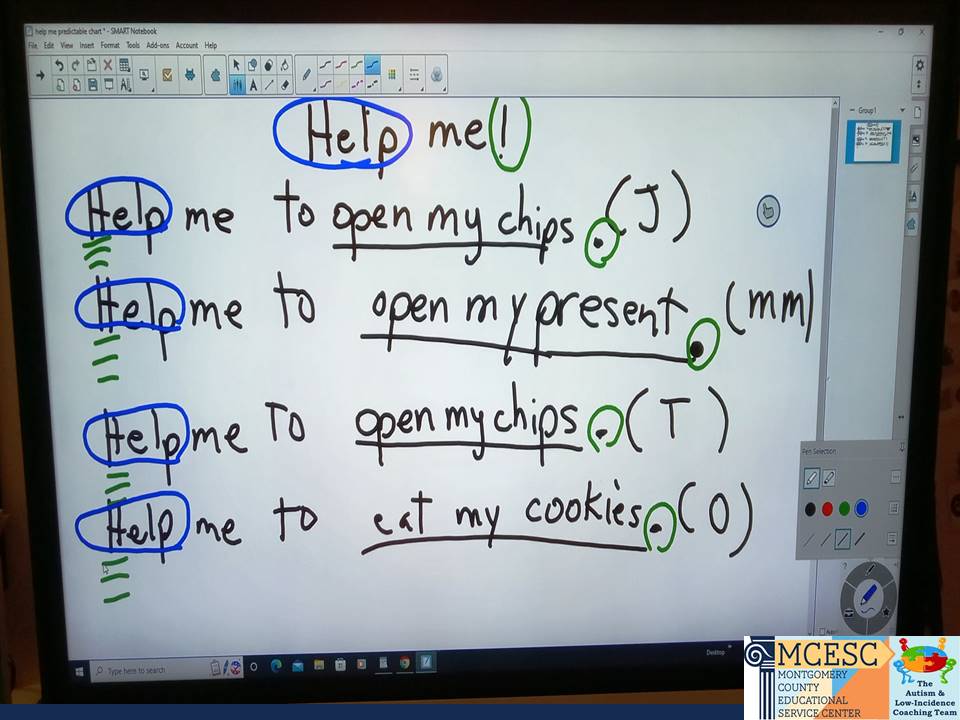
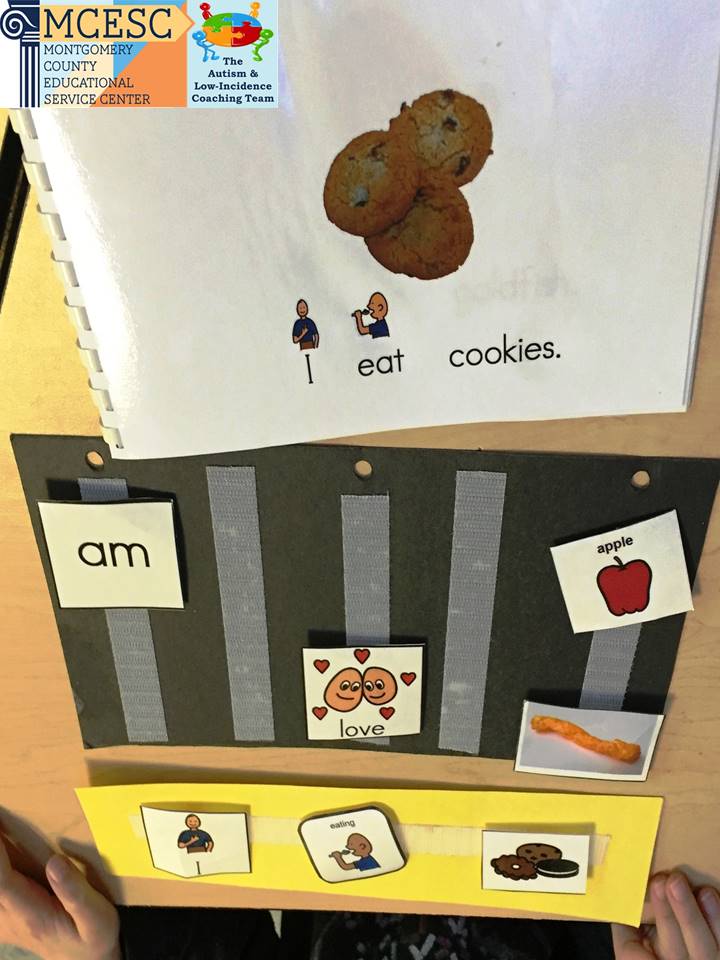
Generalize new sight word knowledge through a variety of
activities including worksheets, sentence comprehension, word searches,
interactive books, games, or finding within a text.
 |
Lisa Orem
Dublin City Schools |
 |
Allison Officer
Stevenson Elementary, Mad River |
 |
Allison Officer
Stevenson Elementary, Mad River |
 |
Allison Officer
Stevenson Elementary, Mad River |
 |
Allison Officer
Stevenson Elementary, Mad River |
 |
Allison Officer
Stevenson Elementary, Mad River |
 |
Allison Officer
Stevenson Elementary, Mad River |
 |
Allison Officer
Stevenson Elementary, Mad River |
 |
Taylor Ruef
Stevenson Elementary, Mad River |
 |
Cynthia Resch
Learning Center- West, MCESC |
 |
Cynthia Resch
Learning Center- West, MCESC |
7. Post-Assessment
·
Re-assess student
knowledge of target sight words using a list or flashcards. Record progress.
These steps provide a task analysis of the
teaching sight words that can also be a helpful guide in developing student IEP
goals.
If you have students who need further differentiation, you can provide picture-supported text to suppor them.
 |
Allison Officer
Stevenson Elementary, Mad River |
 |
Allison Officer
Stevenson Elementary, Mad River |
 |
Allison Officer
Stevenson Elementary, Mad River |
 |
Allison Officer
Stevenson Elementary, Mad River |
 |
Lisa Orem
Dublin City Schools |
 |
Lisa Orem
Dublin City Schools |
 |
Allison Officer
Stevenson Elementary, Mad River |
For more ideas on how to make reading accessible to your students, check out our previous Academic Area Posts:
Reading
Phonics

.png)