Showing posts with label Ziggurat Model. Show all posts

Tuesday, November 15, 2022

Around Town Round-Up: Class-wide Supports Using the Ziggurat Model

Our team LOVES Ruth Aspy and Barry Grossman's The Ziggurat Model! This useful framework makes it easy to prioritize and plan for comprehensive supports when brainstorming interventions. During our coaching, we see examples of The Ziggurat Model in action in a variety of settings. Today's Around Town Round Up will focus on Class-wide Supports that we have seen that meet each layer. 


Sensory Differences and Biological Needs
Class-wide supports for this layer should focus on creating a calming classroom environment and embedding whole-group sensory breaks for students. 
Projected Brain Break Visual with Timer
Deanna Granroth
Wogaman Middle School, Dayton

Calming Classroom Environment
Ashley Holtz
Kleptz ELC, Northmont

Climbing Wall
Amy Pratt
Springcreek Primary, Piqua


Hallway Path
Chris Cool
Dixie Elementary, New Lebanon

Yoga Time
Beth Young and Toni Cockerham
Snyder Park Elementary, Springfield


Whole Group Deep Breathing
Casey Morter
Mad River ECC, Mad River

Visual Boundary
Shanon Vance
Valley Forge Elementary, Huber Heights

Cozy Spot
Shanon Vance
Valley Forge Elementary, Huber Heights

Movement Break
Jolynne Rogers
Mad River ECC, Mad River

Movement Break Visual Cues
Jolynne Rogers
Mad River ECC, Mad River


Reinforcement
Many districts use PBIS supports and teachers have a variety of class-wide reinforcement systems.
Behavior Tickets
Elisha Volp
Northridge Elementary, Northeastern

Behavior Chart
Tara Henrickson
Beavertown Preschool, Kettering

Thrift Store Reinforcers
Amy Day
Englewood Elementary, Northmont

Group Behavior Visual
Jolynne Rogers
Mad River ECC, Mad River


Structure and Visual/Tactile Supports
Knowing what to expect throughout the day can be a huge support for all students! Schedules, class agendas, and visual supports clearly communicate expectations and increase predictability. 
Class Task List
Robin Koronich
Learning Center-West, MCESC

Projected Task List with Timer
Deanna Granroth
Wogaman Middle School, Dayton

Group Schedule
Granville Bastin
Preble ESC

Group Schedule
Lisa Mossing
Beverly Gardens, Mad River

Group Schedule
Rene Naas
Tipp City Middle School, Miami County ESC

Group Schedule
Robin Koronich
Learning Center-West, MCESC

Schedule Google Slide
Traci Gasho
Westbrooke Village Elementary, Trotwood

Group Schedule
Taylor Lawson
Louise Troy Elementary, Dayton

Art Table Job Chart
Christa Everett
Miami East Junior High, Miami East

Fire Drill Visual Cue
Shanon Vance
Valley Forge Elementary, Huber Heights

Schedule Change Visual Cue
Jennifer Schmidt
Beavercreek High School, Beavercreek

Group Schedule
Casey Morter
Mad River ECC, Mad River

Group Time Mini-Schedule

Large Visual Countdown
Rylie Jarrett
Stevenson Elementary, Mad River


Task Demands
Accounting for the various levels of need throughout a classroom ensures that students receive instruction at their instructional level. Often, the most effective way we have seen teachers meet this need is through providing differentiated learning centers. 

Rotation Groups
Bev Richardson
Bruce Elementary, Eaton

Rotation Groups
Haley Urschel
Perrin Woods Elementary, Springfield

Self-Directed Rotation Visuals
Jenna Falldorf
Milton Union Elementary, Milton Union


Positive Environment
The newest addition to The Ziggurat Model emphasizes that students need to feel safe and have positive relationships and experiences while at school in order to be ready for learning.
School Family Display
Rebekah Foust
Mad River ECC, Mad River

Kindness Wall
Jolynne Rogers
Mad River ECC, Mad River


Skills to Teach
We love to see when teachers prioritize direct instruction of skills beyond academics such as communication, coping skills, behavioral expectations, and emotional regulation. These are essential elements to ensuring success for all students. 
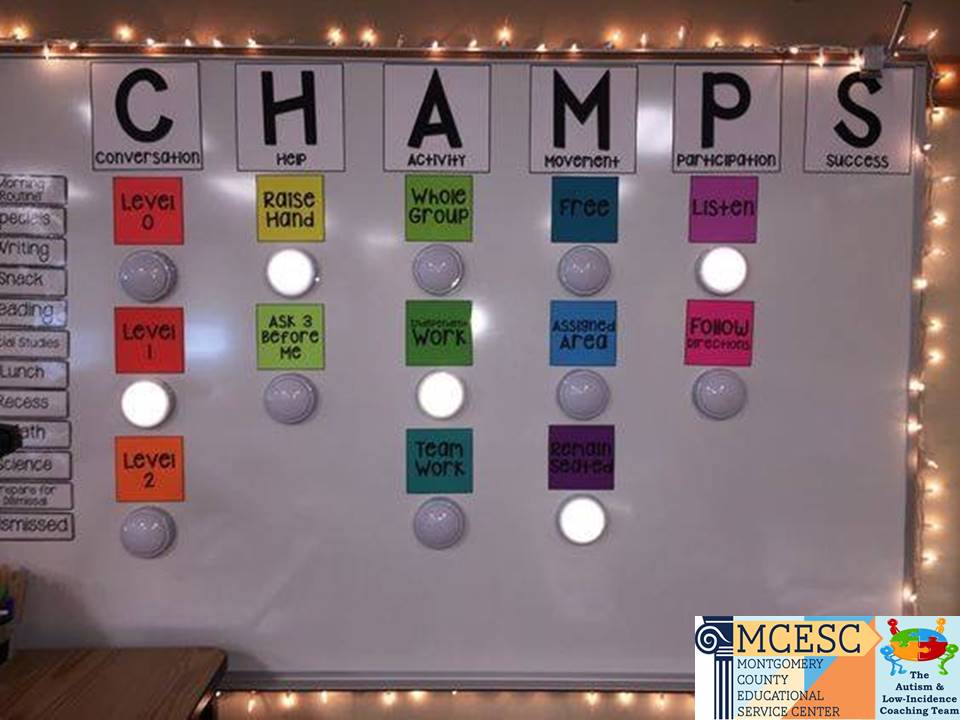
CHAMPS expectations

AAC Support at Door
Christina Helmer
Learning Center-North, MCESC

Communication Wall Display
Laura Windholtz
Learning Center-West, MCESC


Growth Mindset Bulletin Board
Jenna Woelfer
Brantwood Elementary, Mad River

Strategy Wall
Leslie Mann
Smith Middle School, Vandalia

Zones of Regulation Display
Cassandra Hebauf
Northmoor Elementary, Northmont

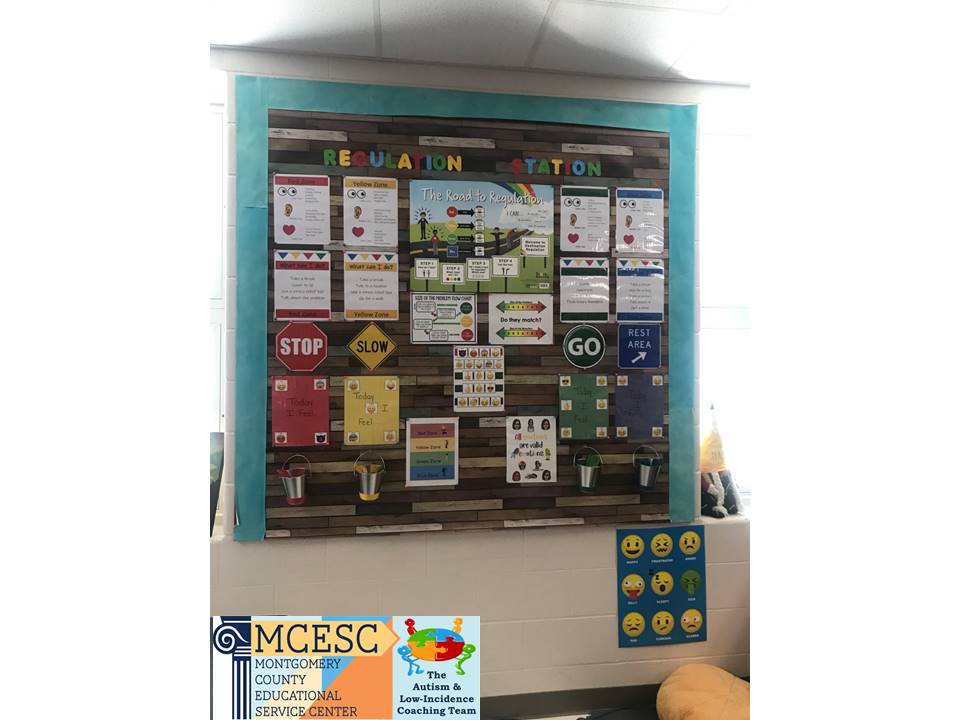
Regulation Station Bulletin Board
Rebecka Stricker
Springcreek Primary, Piqua

For more ideas on using The Ziggurat Model, check out our previous post:

Monday, March 23, 2020

Around Town Round Up: Meeting the Needs of Students with Autism During Specials Using the Ziggurat Model

Specials classes, or Integrated Arts, can be found in many of the schools we coach. These classes often include PE, Music, Library, or Art. In some districts you may also find Technology or Computer Lab or STEM. Specials teachers have the unique role of serving all students in the building across multiple grade levels. This is no easy task! Additionally, they teach students at all ability levels so they are responsible for differentiating their content to best meet the needs of each student. To assist in planning for this differentiation, today's Around Town Round Up highlights examples from across the Miami Valley that can be used in Meeting the Needs of Students with Autism During Specials using The Ziggurat Model.


The Ziggurat Model


The Ziggurat Model was developed by Dr. Ruth Aspy and Dr. Barry Grossman as a framework for designing comprehensive interventions for individuals with complex needs. When coaching teams, we often refer to this model to help in prioritizing interventions and making sure all of the student's needs are met. For more information on The Ziggurat Model visit: www.texasautism.com.

Sensory Differences and Biological Needs
Consider the sensory demands of the specials environment. How will the student be impacted by auditory, visual, or tactile input? Many students with autism may struggle with loud noises, changing acoustics, wide open floor plans, visual clutter, unexpected physical contact, or touching certain textures. Consult with the student's OT for their specific sensory needs. For more information about each sensory system don't miss our Sensory Systems Overview.


Music Room with Acoustic Panels

Child Using Rubber Gloves While Painting

Noise-cancelling Headphones for Students
Trotwood ELC, Trotwood

Reinforcement
Students with autism are often unmotivated by customary rewards. During Specials, look for ways to engage the student either through incorporating special interests (such as technology), creating hands-on learning opportunities, or developing a specific reinforcement system.
Rock Climbing Wall
Eric Bostick
Beverly Gardens Elementary, Mad River

Online Music Game from QuaverMusic.com
Pam George
Washington Primary, Piqua

PE Repetition Checklist Reinforcement System

PE Behavior Contract
Laurie Maravetz
Schaefer Middle School, Springfield

Structure and Visual/Tactile Supports
Structure can be calming and organizing for individuals with autism because they understand what to expect and can predict the outcome. This is especially important during Specials class because typically these classes do not occur daily throughout the year (often biweekly or quarterly) so it is difficult to establish and remember a daily routine. Also, individuals with autism often process visual information twice as fast as their neurotypical peers. Therefore, incorporating structure and visual supports to the Specials classroom can ease anxiety and help students with autism participate more readily. There are a variety of ways to incorporate these supports including:

incorporating visual and physical boundaries to structure the physical environment,
Art Table Labels
Lindsay Carter
Kleptz ELC, Northmont

Colored Spots for Musical Instruments
Pam Horner-Sherman
Demmitt Elementary, Vandalia
Numbered Assigned Seats
Pam George
Washington Primary, Piqua


Colored Dot Assigned Seats
Pam Horner-Sherman
Demmitt Elementary, Vandalia
Art Supply OrganizationDebi Gnau
Mad River Early Childhood Center, Mad River


using visual sequences to structure the class time,
Art Class Daily Visual Schedule
Lindsay Carter
Kleptz ELC, Northmont

Individual Specials Schedule
Heather Balkcom
Washington Primary, Piqua


using visuals to communicate activity expectations,
Art Activity Visual Sequences
Lindsay Carter
Kleptz ELC, Northmont

Daily PE Stretches Visual Sequence
Eric Bostick
Beverly Gardens Elementary, Mad River

Individual Art Schedule
The Autism Helper


Lyric Visual Supports
Pam George
Washington Primary, Piqua


and providing models and exemplars.
Painting Idea Folder
Lindsay Carter
Kleptz ELC, Northmont


Task Demands
For many students Specials, or Integrated Arts, can be a favorite part of the day. They often enjoy the freedom to engage in fun activities and interact with friends. However, this time can often be challenging for our students with autism who struggle to manage the changing sensory, social, and task demands. Prioritize the purpose of Specials for the individual student. Are they working towards mastery of the academic content or are they focusing on social interaction? Consider ways to reduce demands so that the student with autism can be more successful. Some ideas include:

  • Reduce social demands by allowing the student to work independently while peers work in groups
  • Reduce task demands by allowing the student to do mastered, repetitive tasks during group activities
  • Reduce sensory demands by incorporating sensory supports
  • Consider alternative tasks that can be completed if the student becomes too overwhelmed in class
  • Reduce the length of time the student attends Specials
  • Pair the student with a familiar or preferred peer buddy to provide assistance and modeling


Skills to Teach
Sometimes there are specific skills practiced during Specials that the student may need additional direct instruction and practice with. Consider all of the skills needed to be successful with class activities. Determine which skills the student may still need help with. Ask related service providers to prime students on needed skills. The Speech and Language Pathologist can teach important social skills like waiting and turn taking while the Occupational Therapist may provide ideas for addressing sensory needs or teach prerequisite fine motor skills, and the Physical Therapist can assist with motor skills needed for PE activities and Music dances.

Waiting and Turn Taking Visual SupportsKaty Philpot
Rosa Parks ELC, Dayton
Mistake Options Visual
Lindsay Carter
Kleptz ELC, Northmont

Being A Good Loser Social Story
The Autism Helper

Specials can also be a great time to incorporate multisensory lessons to accompany material learned in class. Collaborate with general education teachers and intervention specialist to develop cross-curricular activities for students to help with generalization of core concepts and skills.

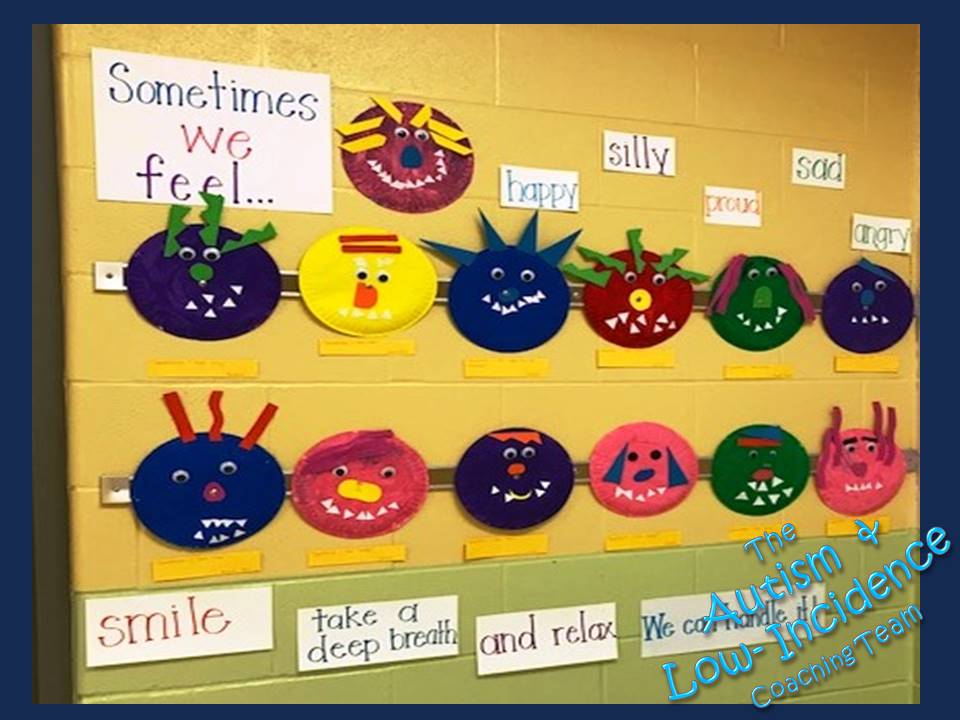
Emotions Art ProjectsAngela Shelton
Rosa Parks ELC, Dayton